


Insomnia can make it difficult to fall asleep, stay asleep, or wake feeling rested. When sleep problems become severe or persistent, a healthcare professional may sometimes prescribe a short course of medication. Two medicines commonly discussed in relation to short-term insomnia are zolpidem and zopiclone. Both are prescription medicines belonging to a group commonly known as Z-drugs, and both act on the brain’s GABA system to produce a calming and sleep-promoting effect.
However, zolpidem and zopiclone are not the same medicine. They have different active ingredients, dosing instructions, effects, side-effect profiles, and considerations regarding dependence. Understanding these differences is useful for anyone researching zopiclone in the UK, particularly people considering treatment options for insomnia.
Contents
- 1 What Is Zolpidem?
- 2 What Is Zopiclone?
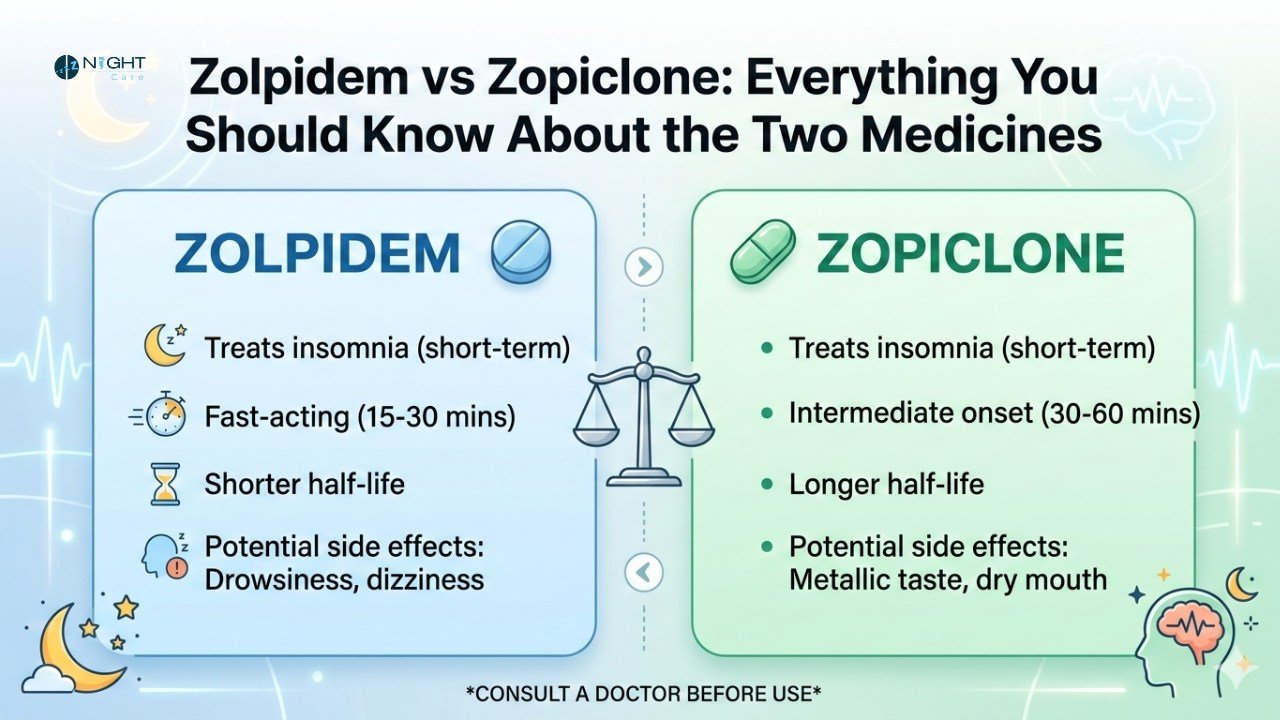
- 3 Zolpidem vs Zopiclone: What Is the Difference?
- 4 Which One Works Faster?
- 5 Side Effects of Zolpidem
- 6 Side Effects of Zopiclone
- 7 Dependence and Withdrawal
- 8 Can You Take Zolpidem or Zopiclone With Alcohol?
- 9 Can You Take Them Together?
- 10 Which Medicine Is Right for You?
- 11 What About Buying Zopiclone Online in the UK?
- 12 Improving Sleep Without Sleeping Tablets
- 13 Frequently Asked Questions
- 14 Final Thoughts
What Is Zolpidem?
Zolpidem is a prescription sleeping medicine used for the short-term treatment of insomnia. It works by affecting GABA, a chemical messenger in the brain involved in calming nervous-system activity. This can help a person fall asleep more easily and may reduce waking during the night.
In the UK, zolpidem is normally prescribed only for a short period because the body can become accustomed to it. NHS guidance states that treatment is generally limited to a few days or weeks, up to four weeks. Zolpidem is usually taken immediately before bedtime and should only be taken according to the prescribed instructions. Taking more than the prescribed amount can be dangerous.
What Is Zopiclone?
Zopiclone is another prescription sleeping medicine used for short-term insomnia. It is also classified as a Z-drug and acts on the brain’s calming GABA system. Doctors may prescribe zopiclone when insomnia involves difficulty falling asleep, waking repeatedly during the night, or waking earlier than desired and the problem is significantly affecting daily life. NHS information states that zopiclone generally starts working within around 30 to 60 minutes.
Like zolpidem, zopiclone is generally intended for short-term use. Treatment commonly lasts from a few days to a few weeks and is usually not continued beyond four weeks because tolerance and dependence can develop.
Zolpidem vs Zopiclone: What Is the Difference?
The main difference is that zolpidem and zopiclone are separate active medicines, even though they belong to the same broad group of sleeping medicines.
| Feature | Zolpidem | Zopiclone |
| Medicine type | Z-drug hypnotic | Z-drug hypnotic |
| Main use | Short-term insomnia | Short-term insomnia |
| General effect | Promotes sleep | Promotes sleep |
| Onset | Around 30 minutes according to NHS guidance | Around 30–60 minutes |
| Typical treatment | Short term | Short term |
| Prescription status in UK | Prescription-only | Prescription-only |
| Dependence risk | Possible | Possible |
| Alcohol | Should be avoided | Should be avoided |
The exact choice depends on the individual patient’s circumstances, medical history, other medicines, age, and the nature of their sleep problem. There is no universally suitable sleeping tablet for everyone.
Which One Works Faster?
Both medicines are designed to help with sleep around bedtime, but the precise response can vary from person to person. NHS information states that zolpidem can take around 30 minutes to work, while zopiclone usually begins working within approximately 30 to 60 minutes.
This does not mean that one medicine will necessarily work faster or better for every individual. Factors such as other medicines, food, age, health conditions, and individual sensitivity can influence how a medicine affects someone. For this reason, patients should not change medicines or doses simply because they believe another sleeping tablet may work more quickly.
Side Effects of Zolpidem
Like all medicines, zolpidem can cause side effects. Commonly reported effects include:
- Sleepiness or tiredness the following day
- Headache
- Dizziness
- Dry mouth
- A bitter or metallic taste
Some people may continue to feel sleepy or less alert the following morning. NHS guidance advises avoiding driving, cycling, or operating machinery if zolpidem causes daytime sleepiness. Alcohol can also increase the sedative effects of zolpidem. More serious reactions require medical attention, particularly if excessive sedation, confusion, breathing difficulties, or other unusual symptoms occur.
Side Effects of Zopiclone
Zopiclone can also cause unwanted effects. Common effects may include:
- Daytime drowsiness
- Dizziness
- Dry mouth
- A bitter or metallic taste
- Headache
- Nausea
Some people may experience impaired coordination or alertness. This is important because reduced alertness can affect activities such as driving. If a person experiences unusual behaviour, severe confusion, breathing difficulties, an allergic reaction, or other serious symptoms after taking a sleeping medicine, urgent medical advice should be sought.
Dependence and Withdrawal
One of the most important things to understand about both zolpidem and zopiclone is that they are intended for short-term use. The UK’s Medicines and Healthcare products Regulatory Agency (MHRA) strengthened warnings in 2026 concerning addiction, dependence, tolerance, and withdrawal associated with Z-drugs. The updated guidance includes medicines such as zopiclone and zolpidem.
Physical dependence means that the body can become accustomed to medicine. Stopping suddenly after prolonged use may then produce withdrawal symptoms. Dependence does not necessarily mean that someone is addicted, but both situations should be discussed with a healthcare professional.
If someone has been taking a Z-drug regularly for an extended period, they should not suddenly stop without professional advice. A prescriber may recommend a gradual reduction, depending on the person’s circumstances.
Can You Take Zolpidem or Zopiclone With Alcohol?
Combining sleeping medicines with alcohol can increase sedation and may impair coordination, awareness, and breathing. NHS guidance specifically advises avoiding alcohol while taking zolpidem because the combination can cause very deep sleep and make it difficult to wake.
The same general safety principle applies to zopiclone: patients should follow their prescriber’s instructions and avoid combining sedative medicines with alcohol unless a healthcare professional specifically advises otherwise. People should also tell their doctor or pharmacist about other medicines they take, including over-the-counter products and supplements.
Can You Take Them Together?
Zolpidem and zopiclone should not be combined unless specifically directed by a qualified healthcare professional. Both are sedating medicines. Taking them together could increase central nervous system depression and the risk of excessive drowsiness, impaired coordination, confusion, or other complications. Patients should never take an additional sleeping tablet because the first medicine does not seem to be working quickly enough.
Which Medicine Is Right for You?
The appropriate medicine, if one is needed at all, depends on several factors. A doctor may consider:
- The type and severity of insomnia
- How long the sleep problem has been present
- Age
- Other medical conditions
- Current medicines
- Previous reactions to sleeping medicines
- The risk of dependence
- Whether non-drug approaches have been tried
Because of these differences, comparing zolpidem and zopiclone simply by asking which is “stronger” or “better” can be misleading.
What About Buying Zopiclone Online in the UK?
People searching phrases such as zopiclone shop UK, buy zopiclone UK, zopiclone online UK, or zopiclone next day delivery should be particularly careful.
Zopiclone is prescription-only in the UK. Online listings that offer prescription medicines without appropriate clinical assessment can create risks involving counterfeit products, incorrect doses, unsuitable treatment, and unsafe combinations.
Rather than choosing a website based on price, delivery speed, or claims about being the “best place to buy zopiclone online,” patients should use legitimate healthcare and pharmacy services and follow the prescribing process.
Improving Sleep Without Sleeping Tablets
Medicines are not the only approach to insomnia. Depending on the cause, a healthcare professional may recommend changes such as maintaining a regular sleep schedule, avoiding daytime naps, reducing stimulating activities before bedtime, and addressing factors contributing to poor sleep.
Persistent insomnia can sometimes be linked to stress, anxiety, pain, medicines, sleep disorders, or other health conditions. Treating the underlying problem may be more useful than repeatedly relying on sleeping tablets.
Frequently Asked Questions
1. Is zopiclone the same as zolpidem?
No. Zopiclone and zolpidem are different prescription medicines, although both are Z-drugs used for short-term insomnia. They have different active ingredients, dosing instructions, and effects. A healthcare professional can determine which treatment is appropriate based on individual circumstances and medical history.
2. Which is better, zolpidem or zopiclone?
Neither medicine is universally better. Zolpidem and zopiclone work differently and may affect people differently. The appropriate option depends on factors such as the type of insomnia, age, medical conditions, other medicines, previous treatment, and individual risk of side effects or dependence.
3. Can I take zopiclone every night?
Zopiclone is generally intended for short-term treatment because regular or prolonged use can cause tolerance and physical dependence. If insomnia continues, speak with your doctor rather than extending treatment yourself. Never increase the prescribed dose or continue treatment longer than recommended.
4. Can I buy zopiclone online in the UK?
Zopiclone is a prescription-only medicine in the UK. Online purchases should only be made through legitimate healthcare and pharmacy services that follow appropriate prescribing requirements. Websites offering prescription medicines without proper assessment may expose consumers to counterfeit, unsuitable, or incorrectly supplied products.
5. Does zopiclone cause next-day sleepiness?
Yes. Zopiclone can cause drowsiness, reduced alertness, dizziness, or impaired coordination the following day. These effects can affect driving and other activities requiring concentration. If you feel sleepy or impaired after taking zopiclone, avoid driving and seek professional advice when necessary.
6. Can I drink alcohol after taking zopiclone?
Alcohol can increase the sedative effects of zopiclone and may cause excessive drowsiness, impaired coordination, or other risks. Patients should follow their prescriber’s instructions and avoid combining zopiclone with alcohol unless a qualified healthcare professional specifically advises that it is appropriate.
Final Thoughts
Zolpidem and zopiclone are both prescription Z-drugs used for the short-term management of insomnia, but they are different medicines with their own effects, precautions, and potential side effects. Both may help with sleep when prescribed appropriately, but risks such as next-day drowsiness, tolerance, dependence, and withdrawal should be taken seriously.
For readers researching sleep medicines and treatment information, ZNightCare aims to provide clear, accessible information to help people better understand medicines such as zopiclone and zolpidem. However, medication should always be used according to professional medical advice and the instructions provided with a prescription.
If you experience ongoing sleep difficulties or are considering changing from one sleeping medicine to another, speak with your doctor or pharmacist. Never increase your dose, combine sleeping medicines, or stop long-term treatment suddenly without professional guidance.
Also Read: Zopiclone and Pregnancy: Can You Take Zopiclone When You Are Pregnant