


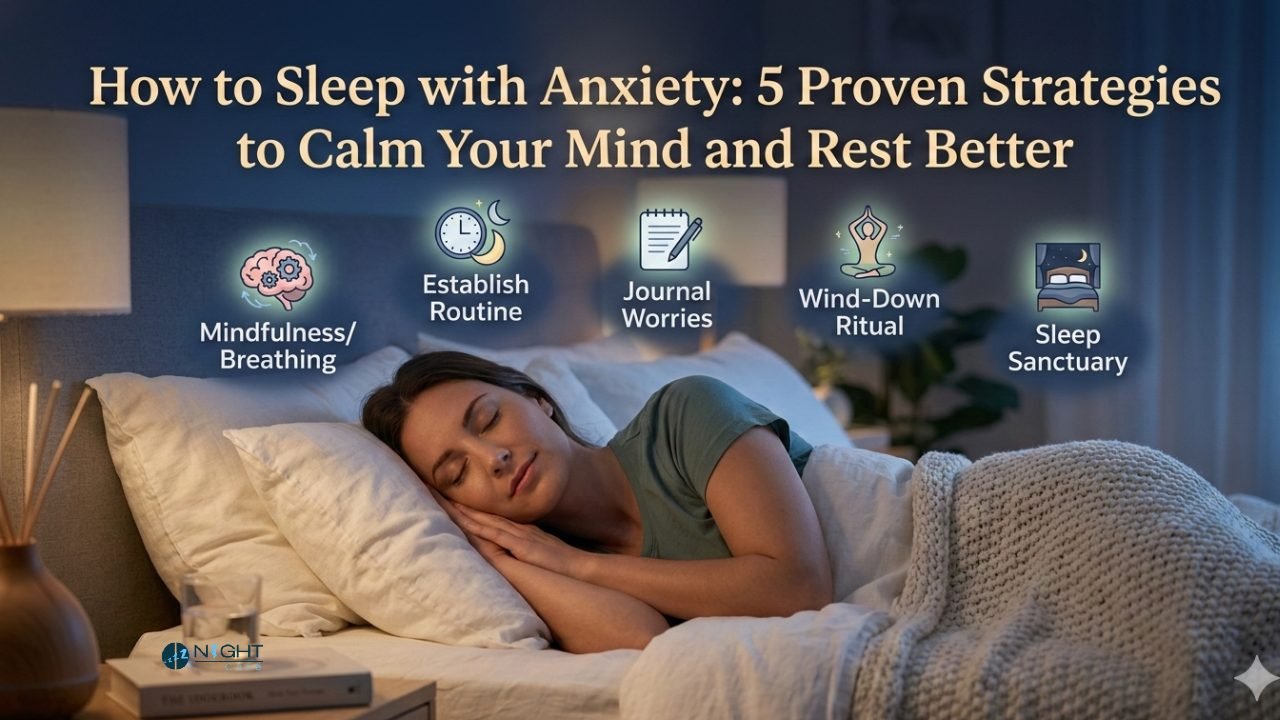
A peaceful night’s sleep can feel difficult when your mind is full of worries. You may lie in bed thinking about work, relationships, finances, or tomorrow’s responsibilities. Even when your body feels tired, your thoughts may continue racing, making it difficult to relax and fall asleep. This is a common experience for people dealing with anxiety.
Anxiety and sleep are closely connected. Anxiety can make it harder to fall asleep or stay asleep, while poor sleep can increase stress, irritability, and anxious feelings the following day. Fortunately, several practical habits can help calm your mind, improve your nighttime routine, and support better rest.
In this guide, we will explore five effective strategies to manage nighttime anxiety and create healthier sleep habits.
Contents
- 1 Understanding the Connection Between Anxiety and Sleep
- 2 1. Create a Relaxing Bedtime Routine
- 3 2. Practise Deep Breathing and Mindfulness
- 4 3. Manage Worries Before Going to Bed
- 5 4. Improve Your Sleep Environment and Daily Habits
- 6 5. Seek Professional Advice When Anxiety Affects Your Sleep
- 7 Building Better Sleep Habits Takes Time
- 8 Frequently Asked Questions (FAQs)
- 8.1 1. How can I fall asleep when I have anxiety?
- 8.2 2. Why does anxiety feel worse at night?
- 8.3 3. Can improving sleep habits help reduce anxiety?
- 8.4 4. What is zopiclone used for?
- 8.5 5. Can I purchase zopiclone online?
- 8.6 6. How can Zopiclone Night Care help readers understand sleep health?
- 8.7 7. When should I seek professional help for anxiety and sleep problems?
- 9 Conclusion
Understanding the Connection Between Anxiety and Sleep
Anxiety activates the body’s natural stress response. When you feel worried or threatened, your brain may remain alert even when there is no immediate danger. Your heart might beat faster, your muscles may feel tense, and your thoughts may become difficult to control.
At bedtime, these reactions can interfere with the transition from wakefulness to sleep. You might repeatedly check the clock, worry about not getting enough rest, or feel frustrated when sleep does not come quickly.
This creates a cycle: anxiety affects sleep, and insufficient sleep can make anxiety more difficult to manage. Understanding this connection is the first step towards breaking the cycle. Rather than forcing yourself to sleep, focus on creating conditions that encourage your mind and body to relax.
1. Create a Relaxing Bedtime Routine
A consistent bedtime routine can signal to your brain that it is time to slow down. When your evenings are predictable and calming, you may find it easier to leave the day’s worries behind. Start by choosing a regular time to prepare for bed. Aim to wake up at approximately the same time every morning, including weekends, to help regulate your body’s internal clock.
Consider including these activities in your evening routine:
- Take a warm bath or shower: This can help your body relax before bedtime.
- Read a book: Choose something enjoyable and preferably avoid stressful or work-related material.
- Dim the lights: Softer lighting in the evening can support your natural sleep-wake rhythm.
- Reduce screen time: Put away your phone and avoid stimulating content before bed.
- Prepare for tomorrow: Organise your clothes, work materials, or to-do list earlier in the evening.
The aim is not to create a perfect routine but to establish habits that help you feel safe, comfortable, and ready to rest.
2. Practise Deep Breathing and Mindfulness
When anxiety keeps your mind active, relaxation techniques can help you shift your attention away from worrying thoughts. Deep breathing and mindfulness are useful practices because they encourage you to focus on the present moment rather than imagined future problems. One simple technique is slow, controlled breathing.
Try the following steps:
- Lie comfortably in bed or sit in a quiet place.
- Breathe gently through your nose.
- Allow your abdomen to expand as you breathe in.
- Breathe out slowly without forcing your breath.
- Continue for a few minutes while keeping your attention on the movement of your breathing.
If your thoughts wander, gently bring your attention back to your breath. You do not need to stop every thought or achieve a completely empty mind. Progressive muscle relaxation is another option. Starting with your feet, gently tense and release different muscle groups, moving gradually towards your shoulders and face. Avoid tensing any area that feels painful. Practising these techniques regularly may help reduce physical tension and make bedtime feel less stressful.
3. Manage Worries Before Going to Bed
One reason anxiety becomes more noticeable at night is that there are fewer distractions. When the house is quiet and daily activities have stopped, unresolved concerns can seem much larger. Instead of trying to suppress your thoughts, give yourself time to process them before bedtime.
Set aside 10 to 15 minutes in the early evening for a simple worry journal. Write down what is troubling you and consider whether there is a practical action you can take. For example, if you are worried about an upcoming meeting, write down the main points you need to prepare. If a problem cannot be solved immediately, acknowledge it and decide when you will revisit it.
You can also try asking yourself:
- Is this something I can control right now?
- What evidence supports my worry?
- What would I say to a friend experiencing the same concern?
- Can this wait until tomorrow?
These questions can help you respond to anxious thoughts more thoughtfully. If you start worrying again in bed, remind yourself that you have already made time to consider the issue. You do not have to solve every problem before falling asleep.
4. Improve Your Sleep Environment and Daily Habits
- Your surroundings and daily activities can influence how easily you fall asleep. A bedroom that feels comfortable and a routine that supports your body clock may help reduce sleep difficulties associated with anxiety.
- Make your bedroom sleep-friendly. Keep the room as dark, quiet, and comfortably cool as possible. Use curtains, earplugs, or a fan if they help you sleep more comfortably.
- Limit caffeine later in the day. Coffee, tea, energy drinks, and some soft drinks contain caffeine, which can interfere with sleep for several hours. Consider avoiding caffeine during the afternoon and evening, especially if you are sensitive to its effects.
- Get regular physical activity. Walking, cycling, swimming, or another activity you enjoy can support sleep and help manage stress. Try to finish vigorous exercise well before bedtime if exercising late makes you feel more alert.
- Spend time outdoors during the day. Natural daylight helps regulate your circadian rhythm, the internal system that influences when you feel awake and sleepy.
- Avoid relying on alcohol to fall asleep. Alcohol may make you feel sleepy initially, but it can disrupt sleep later in the night and worsen sleep quality.
Another helpful strategy is to avoid watching the clock repeatedly. Checking the time can increase pressure to fall asleep and make anxious thoughts more intense. If you remain awake and become increasingly frustrated, get out of bed and do something quiet in dim lighting. Return when you feel sleepy again. This can help prevent your bed from becoming associated with worry and frustration.
5. Seek Professional Advice When Anxiety Affects Your Sleep
Occasional sleepless nights are common, but persistent anxiety-related sleep problems deserve attention. If you regularly struggle to fall asleep, wake frequently during the night, or feel exhausted during the day, consider speaking with a healthcare professional.
Cognitive behavioural therapy for insomnia (CBT-I) is an evidence-based treatment that helps people change thoughts and behaviours that contribute to sleep difficulties. Cognitive behavioural therapy for anxiety may also help you develop healthier ways to respond to persistent worry. Depending on your symptoms, a healthcare professional may assess other possible causes of poor sleep, including medication effects, sleep apnoea, or other health concerns.
What About Sleeping Pills?
Some people consider medication when anxiety makes sleep difficult. However, sleeping medicines are not suitable for everyone, and the right approach depends on the cause of the problem, your medical history, and any other medicines you take.
Zopiclone is a prescription sleeping medicine used for short-term treatment of severe insomnia in appropriate patients. It can cause drowsiness, impaired coordination, dependence, and withdrawal problems. Combining it with alcohol, opioids, or other sedating medicines can be dangerous. If you are researching terms such as Sleeping Pills UK Zopiclone, use reliable medical information to understand the medicine, its risks, and the importance of professional supervision. Do not start, stop, or change a prescribed dose without consulting your prescriber.
If you are considering whether to purchase zopiclone online, speak with a qualified healthcare professional first and use only a legitimate, appropriately regulated pharmacy with a valid prescription where required. Avoid websites offering prescription sleeping medicines without appropriate medical checks. Sleeping pills do not address every underlying cause of anxiety, and they should not replace treatment for persistent anxiety or long-term insomnia.
Building Better Sleep Habits Takes Time
Improving sleep when you have anxiety is a process rather than an overnight achievement. Some nights will be easier than others, and occasional setbacks do not mean your progress has disappeared.
Begin with one or two manageable changes. You might start by keeping a consistent wake-up time and practising slow breathing before bed. Once these habits become familiar, gradually introduce other strategies.
Try to be patient with yourself. The goal is not to force sleep but to create an environment and routine in which sleep can happen naturally.
Frequently Asked Questions (FAQs)
1. How can I fall asleep when I have anxiety?
You can try deep breathing, mindfulness, journaling, and a consistent bedtime routine. Keeping your bedroom quiet and comfortable may also help calm your mind and prepare your body for sleep.
2. Why does anxiety feel worse at night?
Nighttime often provides fewer distractions, making worries more noticeable. Stress, racing thoughts, and concerns about the following day can increase alertness and make falling asleep more difficult.
3. Can improving sleep habits help reduce anxiety?
Yes. Maintaining a regular sleep schedule, exercising during the day, limiting evening caffeine, and practising relaxation techniques may improve sleep quality and support emotional well-being.
4. What is zopiclone used for?
Zopiclone is a prescription sleeping medicine used for the short-term treatment of severe insomnia in appropriate patients. It should only be taken as directed by a qualified healthcare professional because it can cause side effects and dependence.
5. Can I purchase zopiclone online?
If you are considering purchasing zopiclone online, consult a healthcare professional and use a legitimate, appropriately regulated pharmacy. A valid prescription and appropriate medical assessment are essential where required. Avoid websites that offer prescription medicines without suitable checks.
6. How can Zopiclone Night Care help readers understand sleep health?
Zopiclone Night Care can provide educational information about sleep difficulties, healthy bedtime habits, and prescription sleeping medicines. Readers should consult qualified healthcare professionals for personalised medical advice and treatment recommendations.
7. When should I seek professional help for anxiety and sleep problems?
Consider seeking professional help if anxiety regularly prevents you from sleeping, affects your daily activities, or leaves you feeling exhausted. A healthcare professional can assess possible causes and discuss suitable treatments, including cognitive behavioural therapy.
Conclusion
Anxiety can make restful sleep difficult, but small, consistent changes can help you regain control of your nights. A calming bedtime routine, mindfulness, worry management, and healthy daily habits can all contribute to better sleep. If sleep difficulties continue, seeking professional advice can help you find an approach suited to your needs.
At Zopiclone Night Care, understanding the connection between anxiety and sleep is an important step towards making informed decisions about sleep health. Remember that Anxiety and Sleep influence each other, so improving your daily routine and managing stress may help support more restful nights.
With the right guidance, realistic expectations, and consistent sleep habits, you can gradually work towards calmer evenings and better rest. If you are considering medication for persistent insomnia, consult a qualified healthcare professional to understand the available options and their potential risks.
Also Read: Zopiclone 7.5 mg Safety Considerations for Adults Managing Short-Term Insomnia