


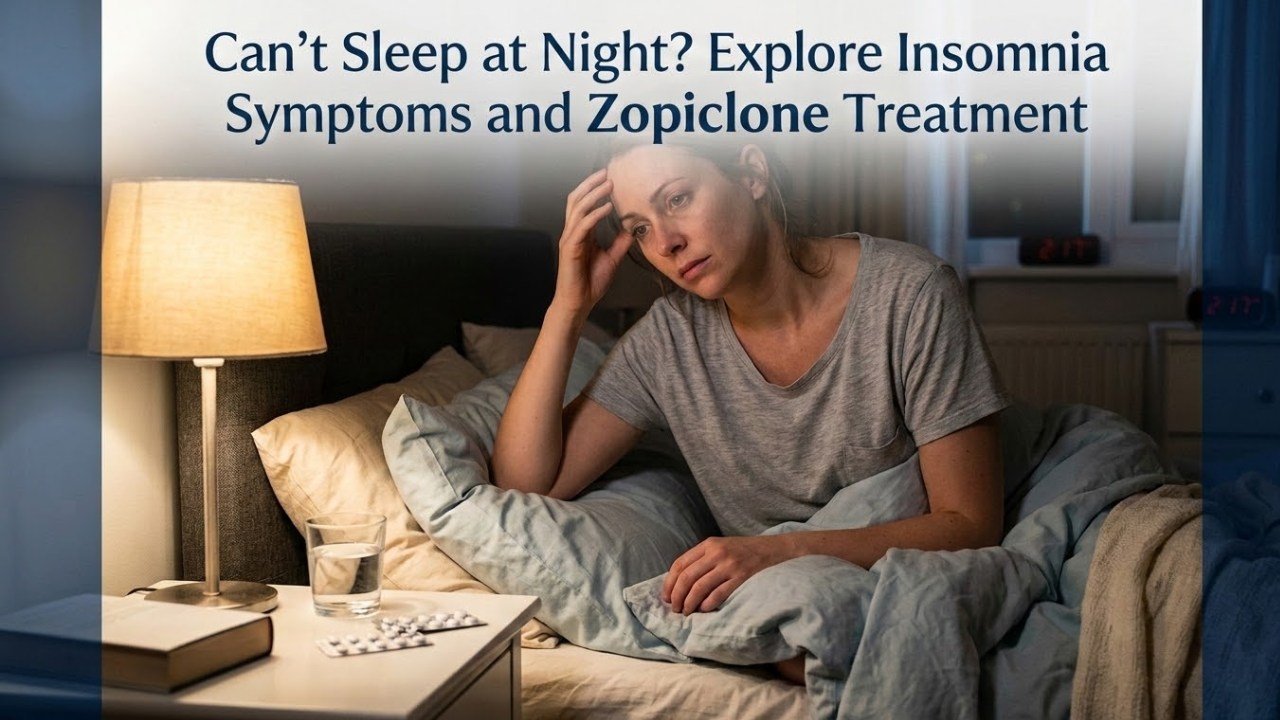
A good night’s sleep is essential for physical health, emotional wellbeing, concentration, and everyday performance. Yet many people experience difficulty falling asleep, staying asleep, or waking too early. When these problems happen regularly and begin affecting daily life, they may be signs of insomnia.
Insomnia can be short-term, often caused by stress, travel, changes in routine, or temporary illness. For some people, however, sleep difficulties continue for weeks or months and can have a significant effect on quality of life. Understanding the symptoms, causes, and available treatment options can help people take appropriate steps toward better sleep.
One medicine that may be prescribed for short-term management of insomnia is zopiclone. It belongs to a group of medicines known as hypnotics and works by producing a calming effect on the brain. However, because it can cause dependence and other side effects, it should only be used under appropriate medical supervision.
Contents
- 1 What Is Insomnia?
- 2 Common Symptoms of Insomnia
- 3 What Can Cause Sleeplessness?
- 4 Improving Sleep Naturally
- 5 When Is Zopiclone Used?
- 6 How Should Zopiclone Be Used?
- 7 Possible Side Effects
- 8 Can You Buy Sleeping Pills Without Medical Advice?
- 9 Zopiclone and Long-Term Insomnia
- 10 When Should You Speak to a Doctor?
- 11 Conclusion
What Is Insomnia?
Insomnia is a common sleep disorder characterised by persistent difficulty getting enough restful sleep. It can involve problems falling asleep at bedtime, waking repeatedly during the night, waking too early in the morning, or feeling that sleep was not refreshing.
Occasional sleeplessness is normal and does not necessarily mean someone has insomnia. The concern increases when sleep problems occur repeatedly and lead to noticeable problems during the day.
People experiencing insomnia may feel tired despite spending enough time in bed. They may also experience reduced concentration, irritability, low energy, or difficulty performing normal activities.
Common Symptoms of Insomnia
Insomnia can affect people differently, but some common symptoms include:
- Difficulty falling asleep at bedtime
- Waking frequently during the night
- Waking earlier than intended
- Difficulty returning to sleep after waking
- Feeling tired or unrefreshed after sleeping
- Daytime sleepiness or low energy
- Difficulty concentrating or remembering things
- Irritability or changes in mood
- Worrying about sleep or bedtime
These symptoms can sometimes create a cycle. For example, someone who has difficulty sleeping may begin worrying about not sleeping, which can make it even harder to relax at bedtime.
What Can Cause Sleeplessness?
There are many possible causes of insomnia. Stress and anxiety are among the most common. Work pressures, relationship difficulties, financial concerns, or major life changes can interfere with the ability to relax at night.
Lifestyle habits can also contribute. Drinking caffeine late in the day, using electronic devices close to bedtime, having an irregular sleep schedule, or taking daytime naps may make it more difficult to maintain healthy sleep patterns.
Other factors can include shift work, jet lag, uncomfortable sleeping environments, chronic pain, certain medicines, and other health or sleep conditions.
Identifying the underlying cause is important because treating the cause may improve sleep without requiring medication.
Improving Sleep Naturally
Before considering sleeping medication, many people can benefit from improving their sleep habits. Good sleep hygiene can make a meaningful difference.
Try maintaining a consistent bedtime and wake-up time, including on weekends. Keep the bedroom comfortable, quiet, and suitably dark. Avoid caffeine and other stimulating drinks close to bedtime, and limit heavy meals late at night.
Reducing screen use before bed may also help. Phones, computers, and televisions can encourage mental stimulation and make it harder to wind down.
Regular physical activity during the day can support healthier sleep, although intense exercise immediately before bedtime may not be suitable for everyone.
Relaxation techniques such as slow breathing, meditation, reading, or a warm bath can also help create a calming bedtime routine.
When Is Zopiclone Used?
When insomnia is severe or persistent, a healthcare professional may consider medication as part of a short-term treatment plan. Zopisign Zopiclone is a prescription hypnotic medicine used to help adults with certain types of insomnia.
It works primarily by enhancing the activity of a chemical messenger in the brain called gamma-aminobutyric acid (GABA). This produces a sedating and calming effect, helping some people fall asleep more easily and remain asleep.
Zopiclone is generally intended for short-term use rather than long-term management of chronic insomnia. A doctor will consider the person’s symptoms, medical history, other medicines, and potential risks before prescribing it.
How Should Zopiclone Be Used?
Zopiclone should be taken exactly as prescribed by a healthcare professional. The prescribed dose and duration should not be changed without medical advice.
Because zopiclone can cause drowsiness and reduce alertness, it is generally taken shortly before going to bed when the person can allow enough time for a full night’s sleep.
It is important not to combine zopiclone with alcohol unless a healthcare professional specifically advises otherwise. Combining sedating substances can increase drowsiness and may lead to serious breathing or coordination problems.
People should also be cautious about driving or operating machinery after taking zopiclone because next-day impairment can occur.
Possible Side Effects
Like other medicines, zopiclone can cause side effects. Some people may experience a bitter or metallic taste, dry mouth, dizziness, drowsiness, headache, or reduced alertness.
More serious problems can occur in some circumstances. Unusual behaviours during sleep, memory problems, severe confusion, allergic reactions, or breathing difficulties require prompt medical attention.
Zopiclone can also lead to tolerance and dependence, particularly when used for longer than recommended. For this reason, it should not be taken more frequently or for a longer period than prescribed.
People who have been using zopiclone regularly should not suddenly stop taking it without discussing this with a healthcare professional, as withdrawal symptoms or rebound insomnia may occur.
Can You Buy Sleeping Pills Without Medical Advice?
Searching online for phrases such as Buy Sleeping Pills is common when people are struggling with sleeplessness. However, choosing a sleeping medicine based only on online information can be risky.
Different sleeping problems can have different causes, and a medicine that is appropriate for one person may not be appropriate for another. Prescription medicines such as zopiclone require professional assessment because of potential interactions, contraindications, side effects, and dependence risks.
Rather than choosing a sleeping tablet solely because it is advertised online, it is safer to discuss persistent insomnia with a qualified healthcare professional. They can help determine whether medication is appropriate and recommend the correct treatment approach.
Zopiclone and Long-Term Insomnia
Medication may provide short-term relief, but it does not necessarily address the underlying reason someone is experiencing chronic insomnia.
For long-term sleep problems, healthcare professionals may recommend behavioural approaches such as cognitive behavioural therapy for insomnia (CBT-I). CBT-I focuses on changing thoughts and behaviours that contribute to poor sleep and can provide lasting benefits for many people.
A combination of improved sleep habits, treatment of underlying conditions, psychological approaches, and carefully selected medication may sometimes be appropriate.
When Should You Speak to a Doctor?
Occasional poor sleep is usually not a major concern. However, medical advice is recommended when insomnia continues, repeatedly affects daytime activities, or is accompanied by other concerning symptoms.
You should also speak with a healthcare professional before taking a prescription sleeping medicine if you are already taking other medicines or have conditions that may affect your ability to use sedating medication safely.
A professional assessment can help distinguish ordinary temporary sleeplessness from an underlying sleep disorder or another health problem.
Conclusion
Insomnia can have a major impact on energy, concentration, mood, and overall quality of life. Recognising symptoms early and addressing factors such as stress, caffeine, irregular routines, and poor sleep habits may help improve sleep naturally.
For some adults with significant short-term insomnia, a doctor may prescribe zopiclone. Although it can help with sleep, it should be used carefully, at the prescribed dose, and for the recommended duration because of potential side effects, dependence, and next-day drowsiness.
If you are considering sleeping medication, avoid self-medicating or purchasing prescription medicines solely on the basis of online advertising. Discuss your symptoms with a qualified healthcare professional to determine the safest and most appropriate option.
For reliable information about sleep medicines and responsible treatment, Zopiclone Night Care encourages readers to prioritise professional medical advice and safe use of prescription medication.
Also Read: Better Sleep Without Fighting the Night: The Solution Your Body Understands