


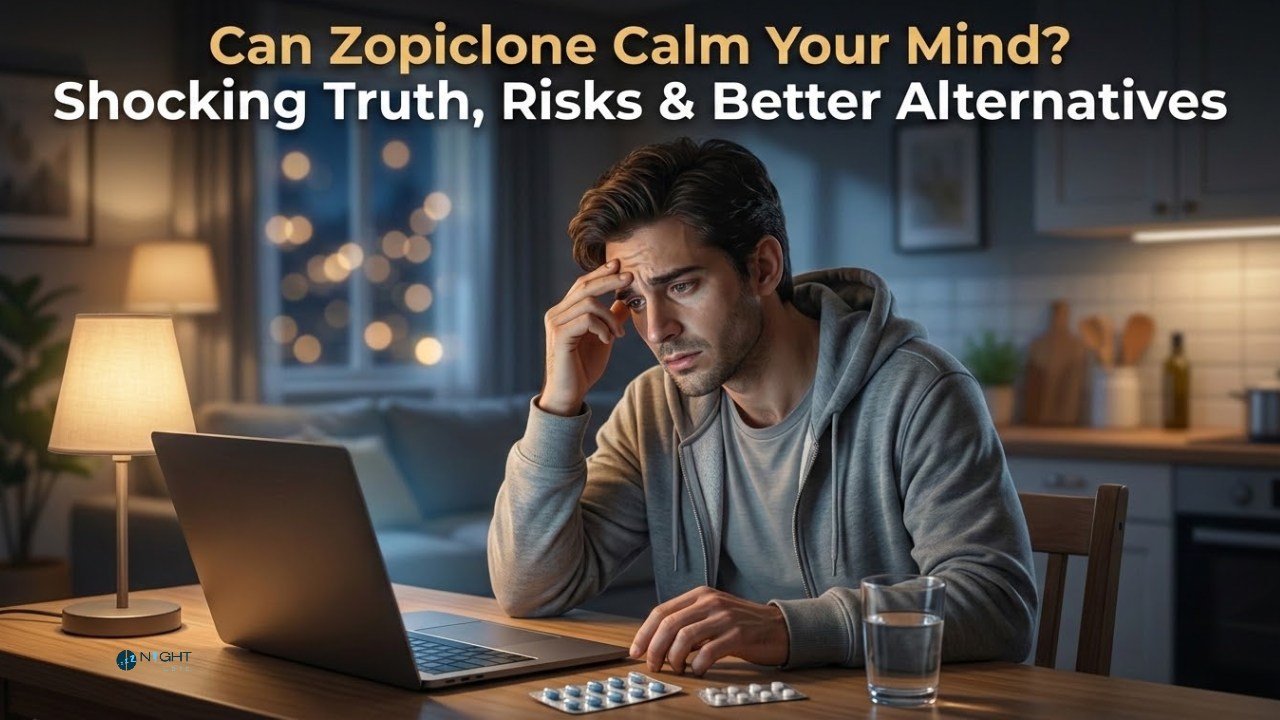
When your mind refuses to switch off at night, sleep can feel impossible. Racing thoughts, stress, anxiety and repeated awakenings can leave you exhausted the next morning. This is why some people wonder whether zopiclone can calm the mind as well as help them sleep.
The short answer is: zopiclone can make you feel calmer and more drowsy because it slows activity in the brain, but it is primarily a short-term sleeping medicine, not a treatment for the underlying causes of anxiety or chronic insomnia. In the UK, zopiclone is prescription-only and is generally intended for short-term insomnia treatment.
That distinction matters. A medicine that helps you fall asleep may provide temporary relief, while long-term improvement often requires addressing sleep habits, stress, anxiety, or other conditions contributing to insomnia.
Contents
- 1 What Is Zopiclone and How Does It Work?
- 2 Can Zopiclone Actually Calm Your Mind?
- 3 The Shocking Truth: Better Sleep Doesn’t Always Mean Better Mental Health
- 4 What Are the Risks of Zopiclone?
- 5 Why People Search for Zopiclone Online
- 6 Better Alternatives for Long-Term Sleep Problems
- 7 Are There Other Medication Options?
- 8 Zopiclone vs. Treating the Root Cause
- 9 Final Thoughts
- 10 Frequently Asked Questions
- 10.1 1. Does zopiclone have a calming effect?
- 10.2 2. How long does it take for zopiclone to make you fall asleep?
- 10.3 3. What happens if I take zopiclone every night?
- 10.4 4. Is zopiclone safe to use long term?
- 10.5 5. Can I drink alcohol after taking zopiclone?
- 10.6 6. Is CBT-I better than sleeping tablets?
- 10.7 7. Is buying zopiclone online safe?
What Is Zopiclone and How Does It Work?
Zopiclone belongs to a group of medicines commonly called Z-drugs. It is a hypnotic medicine prescribed for insomnia, including difficulty falling asleep, waking during the night or waking too early.
Rather than directly treating anxious thoughts, zopiclone works on calming pathways in the brain associated with the neurotransmitter GABA. This can produce sedation and make it easier to fall asleep.
For some people, this may feel like mental relaxation. The constant stream of thoughts can become less noticeable because the medicine makes the brain and body more drowsy. However, feeling sedated is not the same as treating anxiety.
Zopiclone generally begins working within around 30–60 minutes and is normally prescribed for only a short period. The NHS notes that treatment is usually limited to a few days or weeks and generally not longer than four weeks because tolerance can develop.
Can Zopiclone Actually Calm Your Mind?
This is where the answer becomes more complicated. If your busy mind is keeping you awake, zopiclone may reduce alertness enough to help you sleep. Once you are asleep, you may wake feeling that your mind was finally able to switch off. But this does not necessarily mean that the underlying stress or anxiety has improved.
For example, imagine someone is lying awake because they are worried about work. Zopiclone may help that person become sleepy despite those thoughts. But the next night, the same worries may return. This is one reason hypnotic medicines are generally not considered a long-term solution for chronic insomnia. NICE guidance emphasizes short-term use of hypnotics when medication is appropriate, while psychological and behavioural approaches are important for persistent insomnia.
The Shocking Truth: Better Sleep Doesn’t Always Mean Better Mental Health
One of the biggest misconceptions about sleeping tablets is that improved sleep automatically means the underlying problem has been fixed. Sleep and mental wellbeing are closely connected, but they are not identical.
If insomnia is caused by:
- ongoing stress
- anxiety
- depression
- irregular sleeping patterns
- excessive caffeine
- poor sleep habits
- shift work
- another medical condition
- another sleep disorder
then simply making yourself sleepy may not address the root cause. This is why persistent insomnia deserves proper assessment rather than repeated self-treatment.
What Are the Risks of Zopiclone?
Zopiclone can be effective when appropriately prescribed, but it isn’t risk-free.
1. Dependence and withdrawal
One of the most important concerns is dependence. Your body can become accustomed to the medicine, and suddenly stopping after regular use can cause withdrawal symptoms, including increased anxiety or sleep problems. The NHS specifically advises against abruptly stopping zopiclone after regular use and recommends discussing a gradual reduction with a doctor.
2. Tolerance
Over time, the medicine may become less effective as your body adapts to it. This is one reason zopiclone is generally prescribed for a limited period.
3. Next-day drowsiness
You might feel sleepy, tired, dizzy, dazed or less alert the following day. The NHS advises avoiding driving, cycling or operating machinery for 12 hours after taking zopiclone.
4. Unusual sleep behaviours
Rare but serious reactions can include sleepwalking or performing activities while not fully awake. Breathing difficulties and significant mental or behavioural changes can also occur and require urgent medical attention.
5. Alcohol interactions
Alcohol can increase the sedative effects of zopiclone and potentially make it difficult to wake or cause breathing problems. The NHS advises avoiding alcohol while taking it.
Because of these risks, buying zopiclone from an unverified source simply because a website promises fast shipping is not a safe alternative to medical assessment. Prescription medicines should come from legitimate, regulated healthcare and pharmacy channels.
Why People Search for Zopiclone Online
People experiencing severe insomnia often search the internet for phrases such as zopiclone shop UK, buy zopiclone UK, or buy zopiclone online UK because they want a quick solution. Other searches include buy zopiclone online, zopiclone online UK, and phrases promising zopiclone next day delivery or buy zopiclone next day delivery. But convenience should never be confused with safety.
In the UK, zopiclone is prescription-only. A legitimate healthcare professional can determine whether it is appropriate for you, check for interactions with other medicines, consider medical conditions and advise you about duration and stopping treatment. Be particularly cautious of websites offering prescription medicines without appropriate medical checks or making unrealistic claims about guaranteed effects.
Better Alternatives for Long-Term Sleep Problems
If insomnia keeps returning, the goal should not simply be to become unconscious more quickly. The goal is to develop healthier, sustainable sleep.
Cognitive Behavioural Therapy for Insomnia
CBT-I is one of the most important evidence-based approaches for persistent insomnia. It can address the thoughts and behaviours that maintain poor sleep. Techniques may include stimulus control, sleep scheduling, relaxation techniques and changing unhelpful beliefs about sleep. NICE identifies CBT-I as an important treatment approach for long-term insomnia. Unlike a sleeping tablet, CBT-I aims to change the cycle that keeps insomnia going.
Improve Your Sleep Routine
Simple changes can also make a meaningful difference:
- Keep a consistent wake-up time.
- Avoid caffeine late in the day.
- Reduce bright screens close to bedtime.
- Keep your bedroom comfortable, dark and quiet.
- Avoid using your bed as a workplace.
- Exercise regularly, preferably earlier in the day.
- Develop a relaxing wind-down routine.
- Avoid long daytime naps if they interfere with nighttime sleep.
These measures may sound basic, but consistency matters.
Address the Cause
If anxiety, depression, chronic pain, medication side effects, breathing problems during sleep or another health issue is contributing to insomnia, treating that underlying problem may be more useful than repeatedly relying on a sedative. If you snore heavily, wake gasping, experience severe daytime sleepiness or have persistent insomnia, speak with a healthcare professional.
Are There Other Medication Options?
There are other prescription approaches to insomnia, but the right choice depends on the individual. NICE guidance emphasizes that hypnotic medicines should generally be used for short periods when appropriate.
For some people with chronic insomnia, newer treatment approaches may be considered by specialists. For example, NICE has guidance concerning daridorexant, a medicine that works differently from traditional sedative-hypnotics. Whether any medication is suitable depends on individual circumstances and requires professional assessment. The important point is that there is no universally best sleeping tablet.
Zopiclone vs. Treating the Root Cause
Think of insomnia as a warning light on a car dashboard. A sleeping tablet may temporarily make the warning less noticeable. But if the underlying problem remains, the warning can return. Zopiclone can have a place in carefully selected cases of severe, short-term insomnia. NICE recommends that hypnotic treatment should be considered only after non-drug measures have been taken into account and, when used, should be for short periods.
For ongoing insomnia, the bigger question is:
Why can’t you sleep?
Finding that answer can be more valuable than repeatedly searching for a stronger sleeping pill.
Final Thoughts
So, can zopiclone calm your mind? It may temporarily relax the brain and body and make you feel sleepy, particularly when racing thoughts are making it difficult to sleep. However, zopiclone is mainly intended for short-term insomnia treatment and should not be considered a long-term solution for anxiety or persistent sleep problems.
For readers exploring sleep-related information through Znightcare, understanding the benefits and risks is essential. Zopiclone can cause tolerance, dependence, withdrawal symptoms and next-day drowsiness, especially with prolonged or inappropriate use.
If insomnia continues, CBT-I, healthy sleep routines and addressing underlying causes may provide more sustainable results. Never increase your dose, combine zopiclone with alcohol, or stop regular treatment suddenly without professional medical advice. Znightcare supports informed, responsible decisions about sleep and medication.
Frequently Asked Questions
1. Does zopiclone have a calming effect?
Zopiclone can produce a calming and sedating effect by reducing activity in the brain. This may help quiet racing thoughts temporarily, but it is primarily prescribed to treat insomnia.
2. How long does it take for zopiclone to make you fall asleep?
Zopiclone usually begins working within about 30 to 60 minutes. It is normally taken shortly before bedtime, when you can allow enough time for a full night’s sleep.
3. What happens if I take zopiclone every night?
Taking zopiclone every night for an extended period can increase the risk of tolerance, dependence and withdrawal symptoms. Long-term regular use should only continue under appropriate medical supervision.
4. Is zopiclone safe to use long term?
Zopiclone is generally intended for short-term insomnia treatment. Long-term use may increase dependence, tolerance and other side effects, so continued treatment should be regularly reviewed by a healthcare professional.
5. Can I drink alcohol after taking zopiclone?
No. Alcohol can significantly increase zopiclone’s sedative effects, potentially causing excessive drowsiness, impaired coordination, breathing difficulties or difficulty waking. It is safest to avoid alcohol while taking this medicine.
6. Is CBT-I better than sleeping tablets?
For persistent insomnia, CBT-I can provide longer-lasting benefits by addressing thoughts, habits and behaviours affecting sleep. It is recommended as an important treatment approach for chronic insomnia.
7. Is buying zopiclone online safe?
Zopiclone is prescription-only in the UK. Buying from unverified websites can expose you to counterfeit or unsafe medicines. Use legitimate, regulated healthcare and pharmacy services instead.
Also Read: Can’t Sleep at Night? Explore Insomnia Symptoms and Zopiclone Treatment
[…] Also Read: Can Zopiclone Calm Your Mind? Shocking Truth, Risks & Better Alternatives […]