


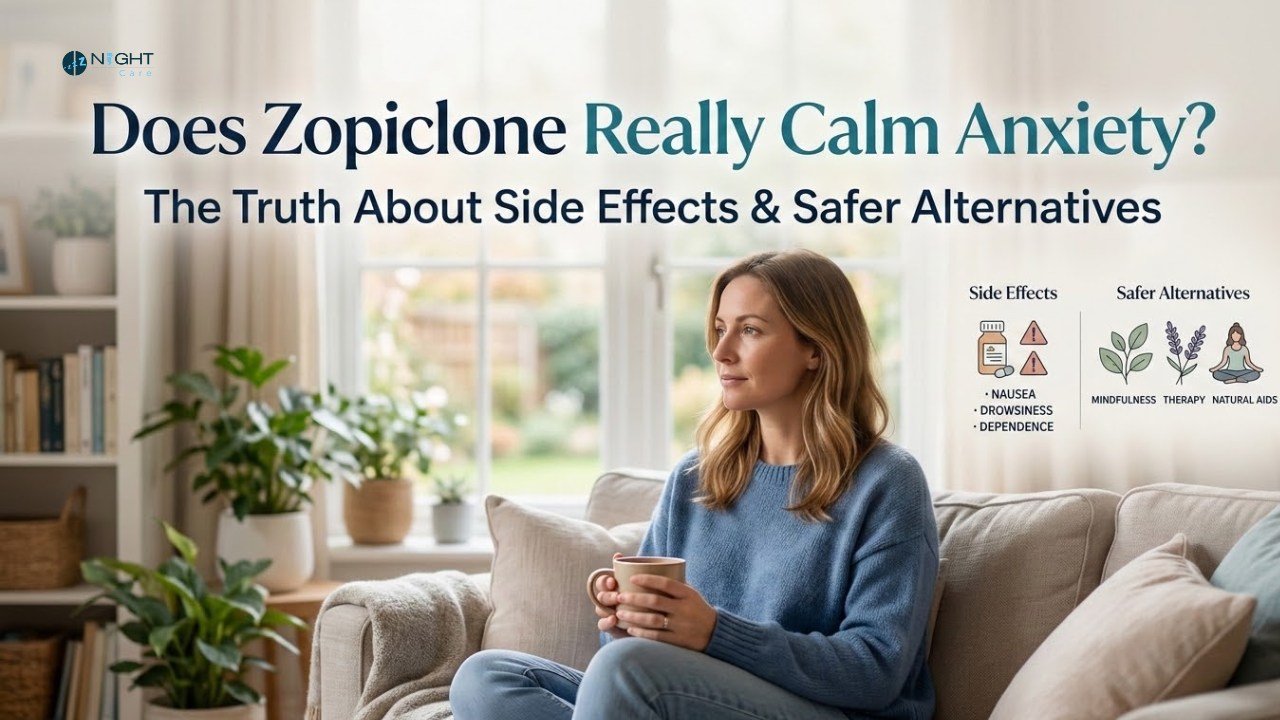
Anxiety can make it difficult to relax, switch off racing thoughts, or get a good night’s sleep. When anxiety and insomnia happen together, some people may wonder whether zopiclone can calm anxiety as well as help them sleep.
Zopiclone tablet is a prescription sleeping medicine primarily used for the short-term treatment of insomnia. Because it has a sedating effect on the brain, it may make a person feel calmer or less alert after taking it. However, feeling sedated is not the same as treating the underlying cause of anxiety. Understanding how zopiclone works, its possible side effects, and safer long-term approaches can help you make more informed decisions about sleep and anxiety treatment.
Contents
- 1 What Is Zopiclone?
- 2 So, Does Zopiclone Calm Anxiety?
- 3 Why Can Zopiclone Make You Feel Relaxed?
- 4 Zopiclone vs. Anxiety Medication
- 5 Common Side Effects of Zopiclone
- 6 Can Zopiclone Cause Dependence?
- 7 What Happens If You Stop Zopiclone Suddenly?
- 8 Is Zopiclone Safe With Alcohol?
- 9 Safer Alternatives for Anxiety and Sleep
- 10 When Should You Speak to a Doctor?
- 11 Final Verdict:
What Is Zopiclone?
Zopiclone belongs to a group of medicines commonly called Z-drugs. It is a prescription hypnotic primarily used for the short-term treatment of insomnia. It works by enhancing the activity of GABA, a chemical messenger in the brain that helps reduce nervous-system activity. This produces a sedating effect, which can help a person fall asleep more easily. Zopiclone generally starts working within around 30–60 minutes, which is why it is normally taken shortly before bedtime. Doctors may prescribe it when insomnia is severe and other approaches have not been sufficient. Treatment is generally kept short because the body can become accustomed to the medicine, reducing its effectiveness and increasing the risk of dependence.
So, Does Zopiclone Calm Anxiety?
Zopiclone for anxiety may make some people feel calmer temporarily because of its sedative effects, but zopiclone is primarily a sleeping medicine, not a treatment for anxiety. This distinction is important. When anxiety is present, the brain and body can remain highly alert, which may lead to symptoms such as:
- Racing thoughts
- Restlessness
- Muscle tension
- A rapid heartbeat
- Difficulty concentrating
- Difficulty falling asleep
- Frequent nighttime waking
Because zopiclone has a sedative effect, taking it can make a person feel sleepy and less alert. If anxiety is preventing someone from sleeping, improving sleep may make them feel less overwhelmed the following day.
But that does not necessarily mean the underlying anxiety has been treated. In other words, zopiclone may help with the insomnia associated with anxiety, rather than addressing the root cause of the anxiety itself. This is one reason healthcare professionals generally distinguish between treating insomnia and treating anxiety.
Why Can Zopiclone Make You Feel Relaxed?
Zopiclone reduces activity in the central nervous system through its effects on GABA-related pathways. This can produce sedation and help the brain transition toward sleep.
That calming sensation can sometimes be interpreted as relief from anxiety. For example, someone experiencing anxious thoughts at bedtime might take prescribed zopiclone and become sleepy within a relatively short period. As they become less alert, their anxious thoughts may seem less intense.
However, this effect is temporary. Once the medicine wears off, the original anxiety may still be present. If someone begins relying on a sleeping medicine whenever they feel anxious, psychological or physical dependence can become a concern.
Zopiclone vs. Anxiety Medication
A major difference is the purpose of treatment. Zopiclone is primarily intended for short-term insomnia. Anxiety disorders, on the other hand, usually require a broader treatment strategy.
Depending on the type and severity of anxiety, healthcare professionals may consider approaches such as:
- Cognitive behavioural therapy (CBT)
- Lifestyle and sleep interventions
- Stress-management techniques
- Certain antidepressant medicines
- Other anxiety-specific treatments when clinically appropriate
The right treatment depends on the individual and should be discussed with a qualified healthcare professional. The NHS notes that insomnia can be associated with stress, anxiety and depression, and that CBT can help change thoughts and behaviours that contribute to ongoing sleep problems.
Common Side Effects of Zopiclone
Like other medicines, zopiclone can cause side effects.
Some of the more common ones include:
1. Next-Day Drowsiness
One of the most noticeable effects can be tiredness or reduced alertness the next day. This matters if you need to drive, operate machinery, work at heights, or perform tasks requiring concentration. The NHS advises avoiding driving, cycling or operating machinery for at least 12 hours after taking zopiclone and longer if you remain sleepy or less alert.
2. Bitter or Metallic Taste
A bitter or metallic taste is a relatively common complaint among people taking zopiclone. Although usually not dangerous, it can be unpleasant.
3. Dry Mouth
Some people experience a dry mouth after taking zopiclone. Drinking water and maintaining good oral hygiene may help, but persistent symptoms should be discussed with a healthcare professional.
4. Dizziness or Reduced Coordination
Zopiclone can make some people feel dizzy, light-headed or less coordinated. This can be particularly concerning in older adults because sedating medicines may increase the risk of falls.
5. Memory or Behaviour Changes
Rarely, unusual behaviours can occur while someone is not fully awake, including activities such as eating, talking on the phone or even sleepwalking. The NHS advises seeking medical advice if serious or unusual effects occur.
Can Zopiclone Cause Dependence?
Yes. This is one of the most important considerations when discussing zopiclone. With continued use, the body can become accustomed to the medicine. This is known as tolerance. A person may feel that the medicine is becoming less effective over time. Dependence can also develop. Importantly, dependence and addiction are not exactly the same thing. A person can become physically dependent on a medicine even when taking it exactly as prescribed.
Z-drugs such as zopiclone are therefore generally intended for short-term use. NHS guidance states that zopiclone is usually prescribed for only a few days to a few weeks and generally not longer than four weeks.
What Happens If You Stop Zopiclone Suddenly?
Stopping suddenly after regular use can cause withdrawal symptoms.
These may include:
- Anxiety
- Restlessness
- Difficulty sleeping
- Irritability
- Other withdrawal symptoms
The NHS specifically warns that suddenly stopping zopiclone can cause symptoms such as agitation or anxiety and recommends that a doctor gradually reduce the dose when appropriate. This is particularly important for people who have been taking zopiclone regularly. Do not suddenly stop a regularly used prescription without speaking with your doctor or pharmacist.
Is Zopiclone Safe With Alcohol?
Generally, you should not drink alcohol while taking zopiclone. Alcohol can increase the sedating effects of zopiclone and may make it much harder to wake up. It can also increase the risk of breathing problems. The NHS specifically advises avoiding alcohol while taking zopiclone. Extra caution is also needed with other medicines that cause drowsiness, particularly opioid painkillers and other sedating medicines. Combining central nervous system depressants can increase risks.
Safer Alternatives for Anxiety and Sleep
If anxiety is affecting your sleep, there are approaches that may be more appropriate for long-term management.
Cognitive Behavioural Therapy
CBT is one of the important non-drug approaches for anxiety. For people whose main problem is insomnia, CBT-I (cognitive behavioural therapy for insomnia) can help address the thoughts and behaviours that keep sleep problems going. Unlike a sleeping tablet, these approaches aim to develop skills that can continue helping after treatment ends. The NHS lists CBT among treatments that may be offered for persistent insomnia.
Better Sleep Habits
Simple changes can also make a meaningful difference.
Consider:
- Going to bed only when sleepy
- Waking at approximately the same time each day
- Limiting caffeine later in the day
- Avoiding alcohol close to bedtime
- Reducing stimulating activities before bed
- Keeping the bedroom comfortable and quiet
- Getting regular daytime physical activity
These strategies may take time, but they can address some of the factors contributing to poor sleep.
Treating the Underlying Anxiety
If anxiety is persistent, severe, or interfering with everyday life, treating the anxiety itself is usually more useful than repeatedly using a sleeping medicine to suppress its nighttime effects. A doctor or mental-health professional can determine whether symptoms fit an anxiety disorder and discuss appropriate treatments.
When Should You Speak to a Doctor?
Consider seeking professional advice if:
- Anxiety is affecting your daily life
- You regularly struggle to sleep
- You need zopiclone frequently
- You feel you cannot sleep without it
- You are taking more than prescribed
- You experience withdrawal symptoms
- You are combining zopiclone with alcohol or other sedating medicines
- You experience unusual behaviour, confusion or severe drowsiness
Urgent medical attention is appropriate for serious symptoms such as difficulty breathing, severe allergic reactions, or thoughts of self-harm.
Final Verdict:
Zopiclone can make some people feel calmer because it has a sedating effect, but it is primarily a short-term sleeping medicine rather than a treatment for anxiety itself.
If anxiety is making it difficult to sleep, zopiclone may temporarily help with the sleep problem when prescribed appropriately. However, it does not necessarily address the underlying causes of anxiety.
Repeated or prolonged use can also lead to tolerance, dependence and withdrawal problems. For ongoing anxiety or chronic insomnia, approaches such as CBT, CBT-I, healthy sleep habits and appropriate professional treatment may provide a more sustainable strategy.
The safest approach is to use zopiclone only as prescribed, avoid alcohol while taking it, and speak with a healthcare professional before changing or stopping regular treatment.
Frequently Asked Questions
Does zopiclone make you relax?
Zopiclone can make you feel relaxed because it slows activity in the brain and causes sedation. However, it is primarily prescribed for short-term insomnia and should not be considered a long-term treatment for anxiety.
Which pill is best for sleep and anxiety?
There is no single pill that is best for everyone. Treatment depends on the cause and severity of symptoms. A doctor can recommend an appropriate option after considering your health, medications, and sleep problems.
Can you take zopiclone during the day for anxiety?
Zopiclone is generally intended to be taken before bedtime for insomnia. Taking it during the day can cause significant drowsiness, impaired coordination, and reduced alertness. Do not use it for daytime anxiety unless specifically directed by your doctor.
What are the worst side effects of zopiclone?
Serious side effects can include severe drowsiness, confusion, unusual behaviour, memory problems, allergic reactions, and breathing difficulties, particularly when combined with alcohol or other sedating medicines. Seek urgent medical attention for severe or unusual symptoms.
Is it safe to take zopiclone every day?
Zopiclone is generally prescribed for short-term use because regular or prolonged use can cause tolerance, dependence, and withdrawal symptoms. Take it only as prescribed, and speak with your doctor before using it regularly or stopping treatment.
Medical disclaimer: This article is intended for general educational information and does not replace advice from a qualified doctor, pharmacist or other healthcare professional. Never change the dose or stop a regularly used prescription medicine without professional guidance.
Also Read: Can Zopiclone Calm Your Mind? Shocking Truth, Risks & Better Alternatives
[…] Also Read: Does Zopiclone Really Calm Anxiety? The Truth About Side Effects & Safer Alternatives […]