



Zopiclone is one of the most commonly prescribed medications for short-term insomnia. It helps people fall asleep faster and stay asleep longer. But many individuals who struggle with ongoing sleep problems often wonder: Can you take Zopiclone long-term?
This question is important because insomnia can become a chronic condition, and relying on sleep medication for an extended period may carry certain risks. In this article, we will explore the long-term use of Zopiclone, its safety, potential risks, and what doctors typically recommend for managing ongoing sleep issues.
Contents
- 1 What Is Zopiclone and How Does It Work?
- 2 Is Long-Term Use of Zopiclone Recommended?
- 3 Understanding the Risks of Long-Term Zopiclone Use
- 4 When Do Doctors Consider Long-Term Use?
- 5 Is Long-Term Zopiclone Use Safe for Everyone?
- 6 Signs You May Be Relying Too Much on Zopiclone
- 7 Safer Alternatives to Long-Term Zopiclone Use
- 8 How to Stop Zopiclone Safely After Long-Term Use
- 9 When Should You Talk to a Doctor?
- 10 Conclusion: Can You Take Zopiclone Long-Term?
What Is Zopiclone and How Does It Work?
Zopiclone belongs to a group of medicines called hypnotics. It works by calming brain activity, making it easier to fall asleep. Most healthcare providers prescribe it for short-term use, usually 2–4 weeks, to prevent dependence.
Zopiclone is effective for sudden or temporary insomnia caused by stress, lifestyle changes, travel, or illness. However, when sleep issues continue for months, the question of extended insomnia treatment comes up.
Is Long-Term Use of Zopiclone Recommended?
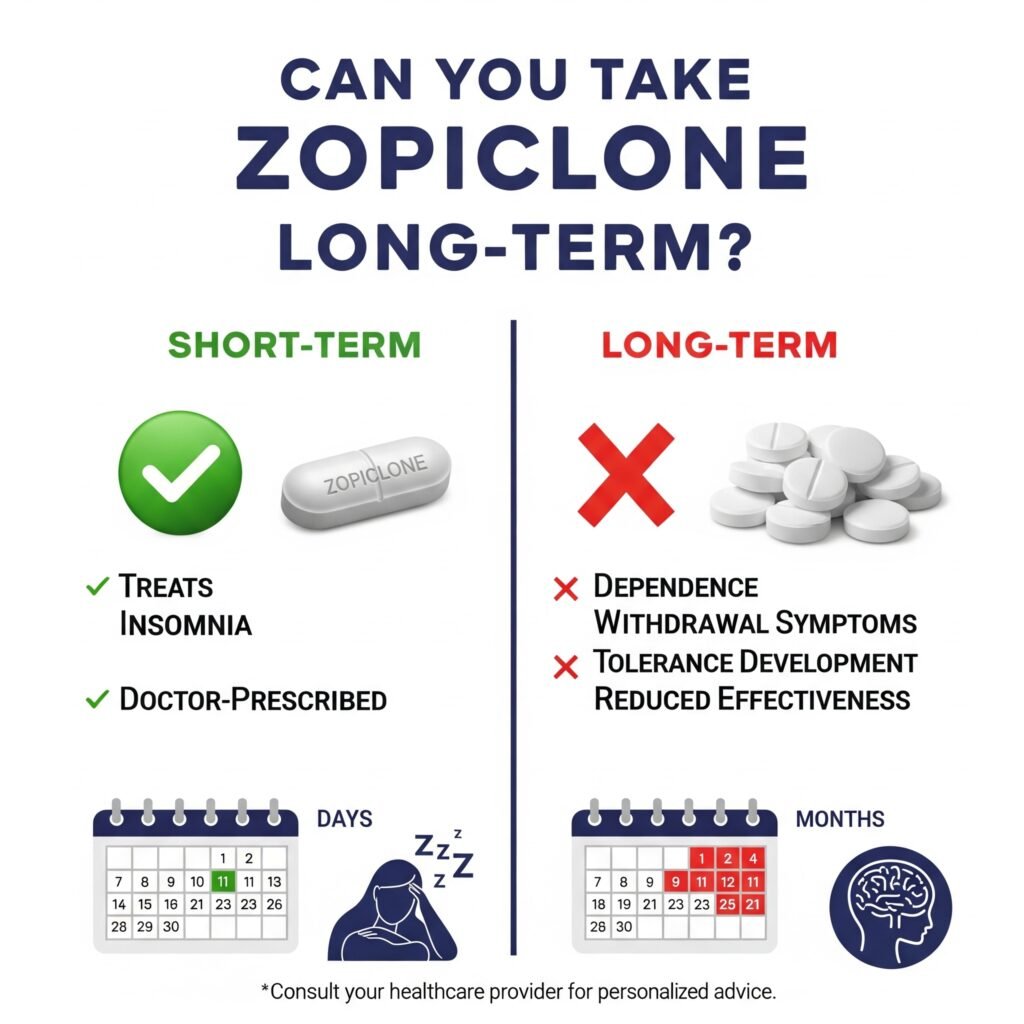
In general, doctors do not recommend long-term use of Zopiclone. The medication is designed for short-term relief, and using it for too long can lead to tolerance, meaning your body becomes used to the drug and may need higher doses to get the same effect.
Here’s why medical guidelines discourage taking Zopiclone for long periods:
1. Increased Risk of Dependence
Taking Zopiclone every night for weeks or months may lead to physical and psychological dependence. This means you may struggle to sleep without it.
2. Tolerance Over Time
With continued use, the medication may stop working as effectively. You may feel tempted to increase the dose, which raises safety concerns.
3. Withdrawal Symptoms
Stopping Zopiclone suddenly after long-term use can cause withdrawal symptoms such as:
- Rebound insomnia
- Anxiety
- Restlessness
- Irritability
- Tremors
These symptoms make it harder to quit and may worsen sleep problems temporarily.
4. Memory and Cognitive Issues
Studies show that chronic sleep medication users may experience:
- Reduced attention
- Memory lapses
- Slower reaction time
This is especially important for older adults, who may be more sensitive to these effects.
Understanding the Risks of Long-Term Zopiclone Use
The zopiclone risks long term depend on various factors like dosage, age, health conditions, and other medications. Below are the common concerns associated with extended use:
1. Daytime Drowsiness
Long-term users often report feeling tired or groggy during the day, affecting work performance and daily activities.
2. Reduced Sleep Quality
Although Zopiclone can help people fall asleep, the quality of sleep may become less natural, affecting deep sleep stages.
3. Increased Risk of Falls and Accidents
Especially in older adults, long-term Zopiclone use can increase the risk of:
- Falls
- Fractures
- Road accidents
This happens because the drug can slow coordination and alertness.
4. Mood Changes
Extended use may lead to changes in mood, including:
- Irritability
- Depression
- Emotional blunting
Always consult a doctor if mood changes become noticeable.
5. Interaction With Other Medicines
Using Zopiclone with alcohol, opioids, antidepressants, or anti-anxiety medicines can increase sedation and breathing-related risks.
When Do Doctors Consider Long-Term Use?
Although medical guidelines prefer short-term treatment, some doctors may allow carefully monitored long-term use in certain situations. This often happens when:
- The patient has chronic insomnia
- Non-medication treatments did not work
- The lowest effective dose is being used
- There is a clear monitoring and tapering plan
Even in these cases, the goal is usually to reduce reliance on sleep medication gradually.
Also Read: Zopiclone and Mental Health: What’s the Relationship?
Is Long-Term Zopiclone Use Safe for Everyone?
No. The safety of long-term use varies from person to person. It depends on:
- Age
- Lifestyle habits
- Sleep disorder severity
- Coexisting mental health conditions
- Other medications being used
It is especially not recommended for:
- Older adults over 65
- People with a history of substance addiction
- Individuals with breathing problems
- Pregnant or breastfeeding women
These groups have a higher risk of harmful side effects.
Signs You May Be Relying Too Much on Zopiclone
If you notice any of the following signs, it may indicate that the medication is becoming a long-term crutch:
- You struggle to sleep without taking Zopiclone
- You feel anxious if you don’t have the medication available
- You wake up feeling dizzy or unwell
- Your dose has increased over time
- You’ve been taking it for longer than 4 weeks
If so, speak with your healthcare provider about next steps.
Safer Alternatives to Long-Term Zopiclone Use
Managing chronic insomnia usually requires a combination of lifestyle changes, behavioral therapy, and sometimes medication. Here are safer alternatives commonly recommended:
1. Cognitive Behavioral Therapy for Insomnia (CBT-I)
CBT-I is one of the most effective long-term treatments for insomnia. It helps people understand and change sleep patterns and thoughts that keep them awake.
2. Improving Sleep Hygiene
This includes:
- Going to bed at the same time every night
- Avoiding caffeine late in the day
- Keeping electronics away before bedtime
- Creating a calm bedroom environment
3. Mindfulness and Relaxation Techniques
Deep breathing, meditation, and progressive muscle relaxation can help reduce stress and improve sleep naturally.
4. Melatonin or Herbal Sleep Aids
Some individuals benefit from natural supplements, although these should still be discussed with a doctor.
5. Short-Term Medication Use
If medication is needed, doctors may suggest taking Zopiclone only:
- A few nights per week
- On a temporary basis
- At the lowest effective dose
This helps reduce dependence and long-term risks.
How to Stop Zopiclone Safely After Long-Term Use
If you’ve been taking Zopiclone for a long time, never stop it suddenly. Instead, doctors recommend a gradual tapering approach:
Step-by-step tapering
- Reduce the dose slowly over several weeks
- Switch to taking it every other night
- Combine tapering with sleep therapy techniques
- Monitor withdrawal symptoms
This slow reduction helps your body adjust naturally.
When Should You Talk to a Doctor?
You should seek medical advice if:
- You’ve been taking Zopiclone for more than 2–4 weeks
- You feel dependent on the medication
- Your insomnia has become chronic
- You experience side effects like memory issues or daytime sleepiness
- Your current dose no longer works
A healthcare provider can help create a personalized plan for safer sleep management.
Conclusion: Can You Take Zopiclone Long-Term?
The short answer is: long-term use of Zopiclone is generally not recommended, mainly due to the risks of dependence, tolerance, and side effects. However, in certain cases, doctors may allow extended use under strict supervision.
If you struggle with chronic insomnia, it is important to explore non-medication treatments, build healthier sleep habits, and work closely with a healthcare provider to manage your sleep safely.
Zopiclone can be helpful for short-term sleep problems, but long-term health is best supported with sustainable sleep strategies rather than medication dependence.
Also Read: Top Questions to Ask Your Doctor Before Starting Zopiclone
[…] Also Read: Can You Take Zopiclone Long-Term? Understanding the Safety, Risks, and Alternatives […]
[…] some medications taken long-term, zopiclone is recommended for short-term use only usually 2 to 4 weeks at most. Most NHS guidance […]
[…] insomnia: Abrupt discontinuation or long-term use may worsen insomnia symptoms beyond baseline […]
[…] explores everything you need to know from how Hypnite works, its benefits, risks, side effects, long-term safety, comparisons with other sleep medications, and practical guidance for responsible […]