



Struggling with sleep can feel like an endless battle. You lie awake, staring at the ceiling, wishing for just a few hours of rest. For many, Zopiclone offers a lifeline. It’s a commonly prescribed medication designed to help people fall asleep faster and stay asleep longer. But if you have work in the morning or need to drive, a pressing question arises: how long does Zopiclone last?
Knowing the duration of this medication is crucial for your safety and daily functioning. You don’t want to wake up feeling groggy or, worse, operate a vehicle while still under the influence. This guide breaks down the timeline of Zopiclone’s effects, its half-life, and the key factors that determine how long it stays in your system.
Contents
- 1 Understanding Zopiclone: The Basics
- 2 Zopiclone Duration: The Timeline of Effects
- 3 The Science: Zopiclone Half-Life
- 4 Factors Influencing How Long Zopiclone Stays in Your System
- 5 The Morning After: Recognizing the “Hangover” Effect
- 6 Safety Tips for Managing Zopiclone Effects
- 7 Frequently Asked Questions
- 8 Conclusion
Understanding Zopiclone: The Basics
Before diving into timelines, it helps to understand what you are taking. Zopiclone belongs to a class of drugs known as “Z-drugs.” It isn’t a benzodiazepine, but it acts in a similar way on the brain. It works by calming your central nervous system, making it easier for your body to drift off.
Doctors typically prescribe it for short-term treatment of severe insomnia. Because it is potent, understanding its lifecycle in your body is essential for avoiding unwanted side effects the next day.
Zopiclone Duration: The Timeline of Effects
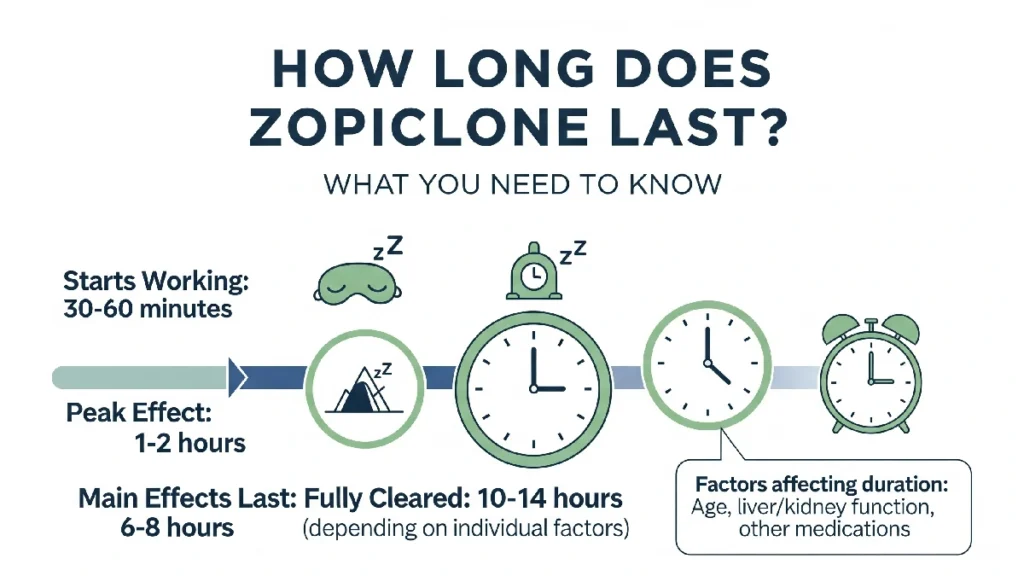
When you take a tablet, you aren’t just looking for sleep; you are looking for a specific window of sedation. Here is the general timeline for a standard 7.5mg dose.
| Stage | Timeframe | Description |
|---|---|---|
| Onset of Action | 30–60 minutes | Effects begin; recommended to take just before going to bed. |
| Peak Effects | 1–2 hours | Highest concentration in the blood; sedation is strongest, leading to deep sleep. |
| Duration of Sleep | 7–8 hours | Main sedative effects last, helping maintain a full night’s sleep. |
| Residual Effects | Up to 10 hours+ | Possible grogginess, drowsiness, or a metallic taste; caution advised with driving or operating machinery. |
The Science: Zopiclone Half-Life
To understand “how long does Zopiclone last” from a medical perspective, we look at its half-life. The half-life of a drug is the time it takes for the total amount of the drug in your body to reduce by half.
For Zopiclone, the elimination half-life is approximately 3.5 to 5 hours in healthy adults.
This means:
- 5 hours after taking it: You have 50% of the drug left in your system.
- 10 hours after taking it: You have 25% left.
- 15 hours after taking it: You have 12.5% left.
While the sedative effects might wear off after 8 hours, trace amounts of the drug remain in your system for longer. For most people, the drug is functionally cleared from the body within 24 to 48 hours, though it can be detected in urine for several days depending on the test used.
Also Read: Can Zopiclone Affect Your Weight or Appetite? Here’s the Truth
Factors Influencing How Long Zopiclone Stays in Your System
The standard half-life doesn’t apply to everyone equally. Your body is unique, and several variables can speed up or slow down how you process the medication.
1. Age
Age is the most significant factor. As we get older, our metabolism slows down, and our liver and kidneys don’t process compounds as efficiently.
- Elderly patients (over 65): The half-life can increase to 7 hours or more. This significantly raises the risk of “hangover effects” the next morning, such as drowsiness or confusion. Doctors often prescribe a lower dose (3.75mg) for seniors to mitigate this.
2. Liver Function
Your liver does the heavy lifting when it comes to breaking down Zopiclone. If you have liver disease or reduced liver function (hepatic impairment), your body cannot clear the drug as quickly. In these cases, the drug accumulates, and the effects last much longer.
3. Kidney Function
While the liver breaks it down, the kidneys help eliminate the metabolites. Poor kidney function can delay the final exit of the drug from your body, extending the detection window.
4. Dosage
It’s simple math: the more you take, the longer it takes to clear. A 7.5mg dose will take longer to leave your system than a 3.75mg dose. Taking more than the prescribed amount not only increases the duration but also heightens the risk of adverse side effects.
5. Hydration and Metabolism
People with faster metabolic rates generally process drugs quicker. Similarly, staying well-hydrated helps your kidneys flush out toxins and drug metabolites more efficiently.
Also Read: Can You Take Zopiclone Long-Term? Understanding the Safety, Risks, and Alternatives
The Morning After: Recognizing the “Hangover” Effect
One of the main reasons people ask about Zopiclone duration is the “morning after” feeling. Even if you slept for 8 hours, you might experience residual effects. This is often called the Zopiclone hangover.
Common signs that the drug is still affecting you include:
- Drowsiness or grogginess upon waking
- A bitter or metallic taste in the mouth
- Difficulty concentrating
- Impaired coordination
- Muscle weakness
If you experience these symptoms, do not drive or operate heavy machinery. Your reaction times may be slower than you realize.
Safety Tips for Managing Zopiclone Effects
To ensure you get the benefits of the medication without the lingering downsides, follow these safety guidelines.
- The 8-Hour Rule: Never take Zopiclone unless you can dedicate a full 8 hours to sleep. If you have an early flight or meeting, skip the dose.
- Avoid Alcohol: Alcohol amplifies the sedative effects of Z-drugs. Mixing them can lead to dangerously deep sleep, breathing difficulties, and a much longer recovery time the next day.
- Take it in Bed: Don’t take the pill and then start your nighttime routine. Be ready to sleep immediately.
- Don’t Double Dose: If you wake up in the middle of the night, do not take a second pill. You will likely still have the drug in your system the next morning.
- Consult Your Doctor: If you find the drowsiness lasts well into the next afternoon, talk to your doctor. You may need a lower dosage or a different medication.
Frequently Asked Questions
Can I drive the morning after taking Zopiclone?
You should wait at least 12 hours after taking Zopiclone before driving, especially if you feel drowsy. In many jurisdictions, driving while impaired by prescription medication is illegal. Always assess your alertness before getting behind the wheel.
Does Zopiclone show up on a drug test?
Zopiclone is not usually included in standard drug screenings (like those for employment). However, specialized tests can detect it. It can be found in urine for up to 48-72 hours and in blood for up to 48 hours.
How long can I take Zopiclone for?
It is designed for short-term use, typically 2 to 4 weeks. Taking it longer can lead to tolerance (where you need more of the drug to get the same effect) and dependence.
Conclusion
Understanding how long Zopiclone lasts is key to using it safely. While the primary sleep-inducing effects typically cover a standard 7-8 hour night, the drug’s presence in your body varies based on your age, health, and dosage.
By respecting the 8-hour rule and listening to your body signals the next morning, you can use Zopiclone effectively to combat insomnia without compromising your safety the next day. Always consult a healthcare professional if you have concerns about how your body is reacting to the medication. Sleep is vital, but so is your safety while awake.
[…] of the most important issues with zopiclone is that the body can develop tolerance and dependency, especially with regular or long-term […]