


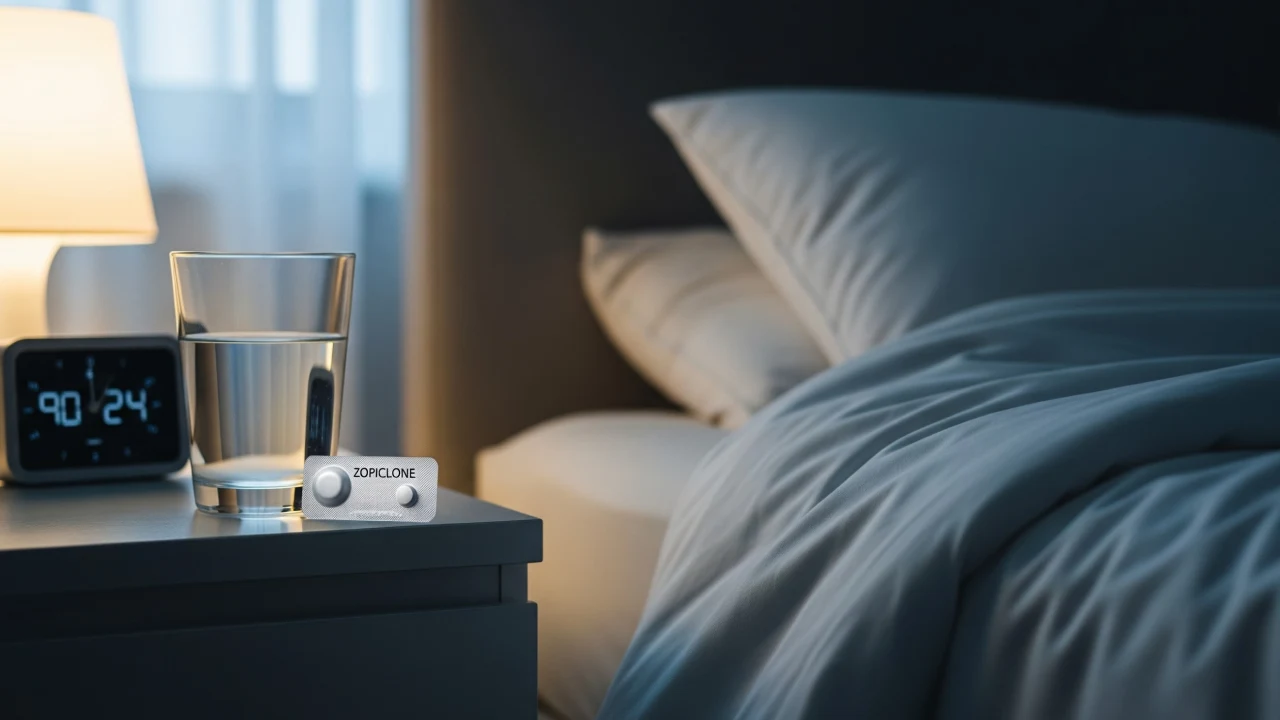
Sleep is one of the most essential pillars of health, yet millions of people around the world struggle with insomnia, difficulty falling asleep, staying asleep, or waking up unrefreshed. For many, this leads to tired days, poor concentration, mood swings, impaired immunity, and reduced quality of life. It’s no wonder that sleeping medications like zopiclone are often prescribed or considered as a quick fix.
In this comprehensive guide, we’ll explore how zopiclone works, the science behind its effects, its benefits and limitations, potential side effects and risks, long-term concerns, alternatives, and tips to use it safely.
Contents
What Is Zopiclone?
Zopiclone is a medication classified as a non-benzodiazepine hypnotic that’s commonly prescribed to help with insomnia primarily to help people fall asleep faster and stay asleep longer. It belongs to a class of drugs sometimes called Z-drugs, which also includes related medications like zolpidem and eszopiclone.
Although it’s similar in effect to benzodiazepines, zopiclone has a slightly different chemical structure and was designed to have fewer side effects on sleep architecture. It typically works by enhancing the effects of gamma-aminobutyric acid (GABA) in the brain, a neurotransmitter that calms neural activity and promotes relaxation and sleep.
Zopiclone is usually prescribed in Zopiclone 7.5 mg doses and is meant for short-term use usually a few days to a few weeks. Its effects begin within about 30 minutes to an hour, and the sedative action lasts long enough for a typical night’s sleep.
How Zopiclone May Improve Sleep
1. Reduces Time to Fall Asleep
One of the clear benefits of zopiclone is that it can help people fall asleep faster. Research studies have shown that it decreases sleep onset latency the time it takes to transition from full wakefulness to sleep which can be a significant relief for those who lie awake for hours.
2. Improves Sleep Duration and Continuity
Zopiclone can also increase total sleep time and reduce the frequency of nighttime awakenings. In clinical studies, patients treated with zopiclone experienced better sleep efficiency meaning more time spent asleep while in bed compared with placebo.
3. Subtle Effects on Sleep Architecture
Unlike some older sleeping pills, zopiclone has relatively minimal effects on the fundamental structure of sleep stages. Some studies found that it preserves REM (rapid eye movement) sleep and doesn’t drastically alter physiological sleep patterns.
4. Enhanced Quality of Life in the Short Term
Not only can zopiclone help night-time sleep, but research has shown that it may also improve aspects of daytime functioning and quality of life in the short term. Patients taking it for a couple of weeks reported better activity levels, social engagement, and work performance compared with those taking placebo.
The Risks and Side Effects of Zopiclone
While zopiclone can be effective, it’s not without risks especially when used inappropriately or for extended periods. Let’s explore these in detail.
1. Common Mild Side Effects
These are the everyday, more frequent side effects:
- Bitter or metallic taste: Many people notice an unusual taste in the mouth shortly after taking zopiclone. This is harmless but can be annoying and sometimes affect appetite.
- Next-day drowsiness or grogginess: Zopiclone can linger in the body, making you feel sluggish in the morning. This is more likely if you sleep less than 7–8 hours after taking it.
- Dizziness and light-headedness: Because the drug slows brain activity, it can affect balance and cause a sensation of unsteadiness.
- Headache, dry mouth, nausea: These are typical minor reactions that usually resolve on their own.
Why it happens: Zopiclone works by calming the brain’s activity, so some effects spill over into waking hours.
2. Daytime Impairment and Safety Risks
Even if side effects are mild, zopiclone can still interfere with daily activities:
- Driving or operating machinery: Even slight drowsiness can slow reaction time and judgment.
- Coordination and motor skills: Tasks that require fine motor control, like cooking or handling tools, may be affected.
- Cognitive functions: Concentration, memory, and alertness can be reduced.
Key point: The risk is higher if a full night’s sleep isn’t obtained. That’s why doctors stress taking it right before bedtime and ensuring enough hours to sleep.
3. Paradoxical Reactions and Psychological Effects
Sometimes, the drug has opposite effects of what’s expected:
- Agitation or irritability: Instead of calming the brain, it can make some people restless or anxious.
- Hallucinations or confusion: Rarely, zopiclone may cause perceptual disturbances or confusion, especially in elderly patients or those with existing cognitive issues.
- Nightmares: Intense or vivid dreams may occur.
Why it happens: Everyone’s brain chemistry is slightly different. In some, GABA-enhancing drugs can over-suppress or imbalance certain neural circuits, leading to unexpected reactions.
4. Complex Sleep-Related Behaviors
These are rare but serious side effects where people perform activities while not fully awake:
- Examples: Sleepwalking, sleep-driving, preparing food, or making phone calls.
- People may have no memory of these actions the next day.
- Risks increase if combined with alcohol, other sedatives, or higher-than-prescribed doses.
Why it happens: Zopiclone can induce a state where the brain is partly asleep but the body still moves and acts. It’s like the brain’s sleep-wake gate is temporarily malfunctioning.
Important: Even though it’s rare, these behaviors can be dangerous for example, sleep-driving could cause serious accidents.
Dependency, Tolerance, and Withdrawal
One of the most important issues with zopiclone is that the body can develop tolerance and dependency, especially with regular or long-term use.
1. Tolerance and Reduced Effectiveness
Over time, the same dose of zopiclone may become less effective, meaning people take higher doses or use the medication longer than intended to get the same sleep-inducing effect.
A growing tolerance can also lead to feeling dependent on the drug to fall asleep even when the original reason for insomnia has improved.
2. Physical and Psychological Dependency
Because zopiclone enhances GABA activity similar to benzodiazepines the brain can adapt to its presence. This adaptation can lead to physiological dependence, meaning the body expects the drug to be present.
3. Withdrawal Symptoms
If someone stops taking zopiclone abruptly after using it regularly, they may experience withdrawal symptoms, such as:
- Rebound insomnia (worse sleep than before starting)
- Anxiety or irritability
- Tremors
- Sweating
- In rare cases, seizures or psychosis
Because of this, doctors often recommend tapering off slowly rather than stopping suddenly.
Comparisons With Other Sleep Treatments
Zopiclone is just one of many options and in recent years, newer sleep medications and therapies have emerged:
Non‑Drug Alternatives
- CBT‑I (Cognitive Behavioral Therapy for Insomnia):
Strong evidence shows CBT‑I which focuses on sleep habits and thoughts improves sleep quality sustainably without medication risks. - Sleep hygiene and behavioral changes:
Adjusting light exposure, reducing stimulants, and building routines often helps a lot before medications are even considered.
Newer Medications
Newer medications like orexin receptor antagonists (e.g., daridorexant) are gaining attention for less dependence and fewer residual effects, but may be costly and not suitable for everyone.
Real-World Experiences with Zopiclone: Benefits and Challenges
Zopiclone is a sedative-hypnotic medication primarily used for short-term treatment of insomnia. It is chemically distinct from benzodiazepines but works similarly by enhancing GABA (gamma-aminobutyric acid) activity in the brain. GABA is an inhibitory neurotransmitter, which means it slows down brain activity, helping people fall asleep faster, sleep more deeply, and reduce nighttime awakenings.
- Prescription-only: It’s not an over-the-counter drug.
- Duration of use: Typically prescribed for 2–4 weeks due to risk of dependence.
- Forms: Usually tablets (commonly 3.75 mg, 5 mg, or 7.5 mg).
Real-World Experiences: Benefits and Challenges
Benefits
1. Quick onset of sleep: Zopiclone helps many fall asleep rapidly, usually within 30–60 minutes, making it easier to initiate sleep without long periods of tossing and turning.
2. Improved sleep duration: Users often experience longer, uninterrupted sleep, which allows for better rest, reducing fatigue, improving mood, and supporting overall daytime functioning.
3. Reduced anxiety at bedtime: The calming effect on the brain helps lower pre-sleep anxiety, making it easier to relax and fall asleep without racing thoughts.
4. Short-term relief: Zopiclone is effective for temporary insomnia caused by stress, travel, or illness, providing immediate, short-term improvement in sleep quality.
Challenges
1. Daytime drowsiness: Some experience lingering grogginess or a hangover effect, which can impair alertness, focus, and daily performance the following day.
2. Potential for dependence: Prolonged use can cause psychological or physical dependence, making discontinuation difficult and increasing the risk of misuse.
3. Memory and coordination issues: Short-term memory lapses and clumsiness may occur, heightening the risk of accidents, particularly in elderly users.
4. Unpleasant taste or side effects: Users may notice a metallic or bitter taste, dry mouth, headaches, or rarely, unusual behaviors like sleepwalking.
Conclusion
Zopiclone can be an effective short-term solution for insomnia, helping people fall asleep faster, stay asleep longer, and improve overall sleep quality. It offers benefits such as reduced sleep onset latency, better sleep continuity, and temporary improvements in daytime functioning. However, its use carries risks, including next-day drowsiness, dependency, tolerance, withdrawal symptoms, and rare complex sleep behaviors. Zopiclone is best reserved for short-term or situational insomnia under careful medical supervision.
Long-term sleep improvement is better achieved through non-drug approaches like cognitive behavioral therapy for insomnia, good sleep hygiene, and lifestyle adjustments, which provide sustainable benefits without the risks of medication dependence or adverse side effects.
Also Read: Can UK Zopiclone Sleeping Pills Help Improve Sleep During Short Term Insomnia
[…] Behavioural Therapy for Insomnia (CBT-I) is widely recognised as one of the most effective long-term treatments for sleep problems. It helps identify and change thoughts and behaviours that may contribute to […]