


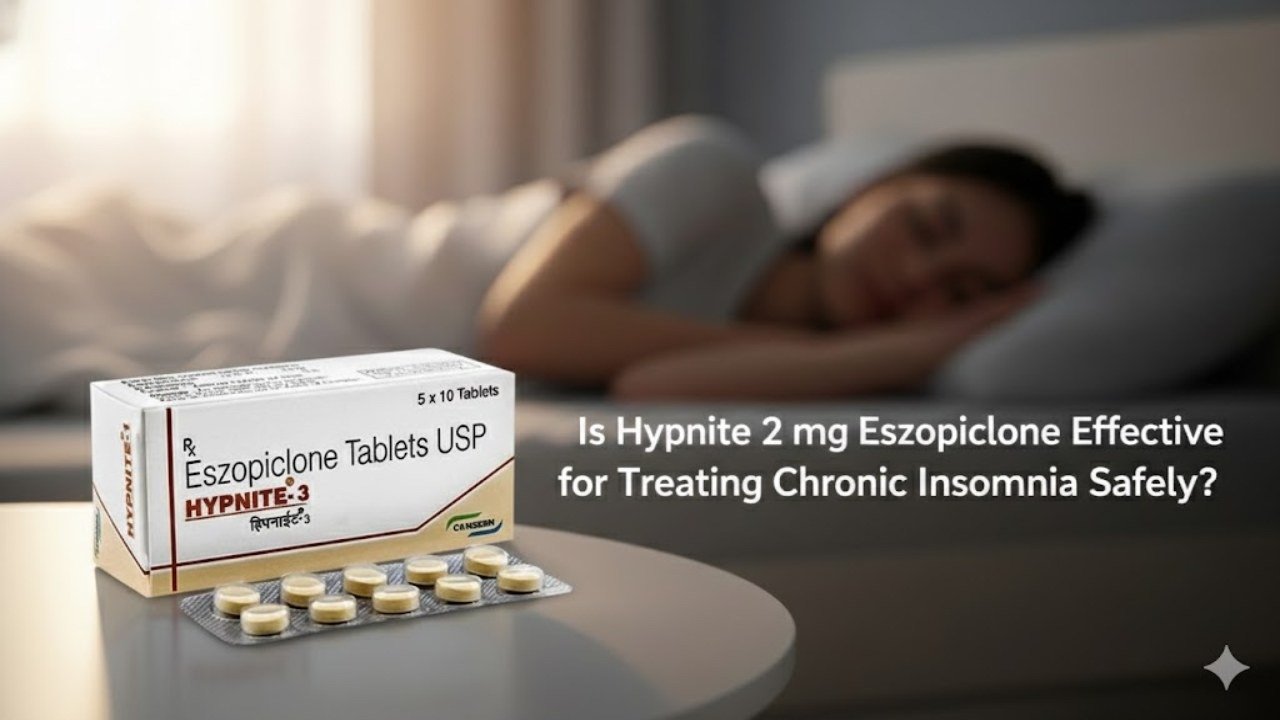
Chronic insomnia is more than just a few sleepless nights. For millions of people, it is a long-term struggle that affects physical health, mental well-being, productivity, relationships, and overall quality of life. When sleep deprivation becomes persistent, many individuals turn to medical solutions such as Hypnite 3 mg, a commonly prescribed tablet containing eszopiclone.
This comprehensive guide explores everything you need to know from how Hypnite works, its benefits, risks, side effects, long-term safety, comparisons with other sleep medications, and practical guidance for responsible use.
Contents
- 1 What Is Hypnite 3 mg (Eszopiclone)?
- 2 How Hypnite 3 mg Works in the Brain
- 3 Effectiveness of Hypnite 3 mg for Chronic Insomnia
- 4 Short-Term vs Long-Term Use of Hypnite 3 mg (Eszopiclone)
- 5 Risk of Dependence and Withdrawal
- 6 Comparison of Sleep Medications
- 7 Best Practices for Safe Use (Detailed Explanation)
- 8 Lifestyle Changes That Enhance Results
- 9 Conclusion
What Is Hypnite 3 mg (Eszopiclone)?
Hypnite 3 mg is a prescription sleep medication whose active ingredient, Eszopiclone, belongs to a class called non-benzodiazepine hypnotics (often referred to as Z-drugs). It’s prescribed for people who have trouble falling asleep, staying asleep, or both.
Eszopiclone acts on the central nervous system by enhancing the activity of GABA (gamma-aminobutyric acid) , a neurotransmitter that slows down brain activity. This calming effect helps promote sleep onset and sleep maintenance.
How quickly it works:
- Most people begin to feel sleepy within 30–60 minutes after taking it.
- It is intended to be taken right before bedtime when you can commit to at least 7–8 hours of sleep.
Hypnite Is Different from Benzodiazepines
Eszopiclone is not a benzodiazepine (like diazepam or alprazolam). It targets specific sub-units of the GABA receptor, potentially offering less impact on normal sleep architecture (like stages of deep sleep) than older benzodiazepines.
How Hypnite 3 mg Works in the Brain
Sleep isn’t just about switching off the brain. It’s an active neurological process controlled by a balance between excitatory (wake-promoting) and inhibitory (sleep-promoting) signals. Chronic insomnia happens when this balance is disrupted usually because the brain stays too alert at night. Hypnite 3 mg works by restoring that balance.
1. Acts on GABA receptors
Hypnite 3 mg works by increasing the effect of GABA, a calming neurotransmitter in the brain. GABA reduces excessive brain activity. When Hypnite enhances GABA action, it produces a calming effect that helps reduce anxiety, mental overactivity, and prepares the brain for sleep.
2. Slows brain signals
Hypnite slows down the transmission of nerve signals in the brain. This slowing effect reduces rapid thoughts and mental alertness. As brain activity decreases, the body enters a relaxed state, making it easier for a person to fall asleep naturally without feeling overly stimulated or restless.
3. Targets sleep centers
Hypnite mainly acts on brain areas involved in starting sleep, such as the sleep–wake regulation centers. It does not strongly affect memory or muscle control. This selective action helps induce sleep without causing heavy sedation, allowing a more natural sleep pattern compared to stronger sedatives.
4. Reduces alertness
By calming brain activity, Hypnite reduces wakefulness and alertness. It helps quiet the mind, decreases attention to external stimuli, and reduces the feeling of being wide awake. This makes it especially useful for people who have difficulty falling asleep due to overthinking.
5. Short-acting effect
Hypnite acts quickly and stays in the body for a short time. This helps a person fall asleep faster without causing long-lasting drowsiness the next day. Because of its short duration, it is mainly useful for sleep onset insomnia when taken as prescribed.
Effectiveness of Hypnite 3 mg for Chronic Insomnia
Hypnite 3 mg improves sleep by helping people fall asleep faster, stay asleep longer, and get deeper, more restful sleep. This leads to better morning freshness, improved concentration, mood stability, and higher daytime energy.
1. Faster Sleep Onset (Helps You Fall Asleep Quicker)
Many people with insomnia struggle to fall asleep because their mind remains active at bedtime. Hypnite helps reduce this mental and physical hyper-arousal.
- Most users fall asleep within 15–30 minutes after taking the tablet.
- It helps quiet racing thoughts and bedtime anxiety.
- Reduces frustration and stress associated with lying awake for long periods.
By shortening the time it takes to fall asleep, bedtime becomes more predictable, which can reduce fear and anxiety around sleep over time.
2. Improved Sleep Maintenance (Helps You Stay Asleep)
Waking up multiple times during the night is a common feature of chronic insomnia. Hypnite helps stabilize sleep throughout the night.
- Decreases the number of nighttime awakenings
- Helps users return to sleep more easily if they do wake up
- Reduces early-morning awakenings
This allows the body to complete full sleep cycles, which are essential for physical and mental recovery.
3. Increased Total Sleep Time
People with insomnia often get far less sleep than their body needs. Studies on eszopiclone show that Hypnite can increase total sleep time by 45–90 minutes per night.
- Extends overall sleep duration.
- Supports healthier transitions between sleep stages.
- Minimizes broken or fragmented sleep.
Even modest increases in total sleep time can significantly improve alertness, mood, and daily performance.
4. Better Sleep Quality
Sleep quality is not only about how long you sleep, but how deeply you sleep. Hypnite helps promote deeper, more restorative sleep.
- Improves depth of sleep, especially restorative stages.
- Makes sleep less sensitive to minor noise or movement.
- Reduces the feeling of light or unrefreshing sleep.
As a result, many users wake up feeling more refreshed and physically rested.
5. Improved Daytime Functioning
Poor sleep affects nearly every aspect of daily life. By improving nighttime sleep, Hypnite helps reduce common daytime symptoms of insomnia.
- Better focus, memory, and mental clarity.
- More stable mood and emotional control.
- Increased energy and motivation.
- Reduced daytime tiredness and irritability.
Effective treatment of insomnia helps restore normal daytime functioning, improving overall quality of life.
Short-Term vs Long-Term Use of Hypnite 3 mg (Eszopiclone)
Short-term use of Hypnite 3 mg is mainly for temporary or situational insomnia caused by stress, travel, or lifestyle changes. When used for a few days to a couple of weeks, it helps people fall asleep faster, stay asleep longer, and wake feeling more rested. Side effects are usually mild and temporary, such as a bitter taste, light dizziness, or next-day drowsiness. The risk of dependence is low when taken as prescribed for a short duration.
Long-term use may be considered for chronic insomnia, but only under close medical supervision. Although eszopiclone has evidence supporting longer use compared to many sleep medicines, extended treatment can increase the risk of tolerance, psychological dependence, and rebound insomnia if stopped suddenly. Ongoing use may also cause daytime sleepiness or reduced alertness.
Doctors typically recommend using the lowest effective dose, regular review of treatment, and combining medication with good sleep habits or cognitive behavioral therapy for insomnia (CBT-I) to ensure safe and effective long-term management.
Risk of Dependence and Withdrawal
Risk of dependence and withdrawal refers to the likelihood that a medicine causes physical or psychological reliance and produces symptoms when stopped. Compared to benzodiazepines, some sleep medicines have a lower addiction risk and milder withdrawal effects, especially when used correctly and short-term.
- Lower risk of addiction and rebound insomnia than benzodiazepines.
- Psychological dependence and temporary sleep disturbance may occur if misused or stopped abruptly.
However, psychological dependence can still occur if used improperly or without medical oversight. Abrupt discontinuation after long-term use may cause temporary sleep disturbance.
Comparison of Sleep Medications
Non-benzodiazepine sleep medications are prescription drugs used to treat insomnia by selectively acting on sleep-related brain receptors, improving sleep onset and maintenance while preserving normal sleep architecture with lower dependence risk than benzodiazepines.
| Feature | Vs. Benzodiazepines | Vs. Zolpidem | Vs. Natural Sleep Aids |
| Dependency risk | Lower risk of dependence and withdrawal compared to benzodiazepines | Similar or slightly lower | Higher than natural aids |
| Muscle relaxation | Causes less muscle relaxation, reducing weakness and fall risk | Similar | Not applicable |
| Sleep architecture | Preserves deep and REM sleep better | Comparable | Natural sleep only, no structured stages |
| Duration of action | More sleep-focused, less prolonged sedation | Longer duration than zolpidem | Variable and often short |
| Sleep maintenance | Better quality and continuity of sleep | More effective for staying asleep | Limited effectiveness |
| Side effects | Less daytime sedation than benzodiazepines | More taste disturbance | Minimal side effects |
| Strength of effect | Strong and clinically proven | Strong | Mild to moderate |
| Reliability | Predictable response | Predictable | Inconsistent |
| Prescription needed | Yes | Yes | No |
| Risk profile | Safer than benzodiazepines | Moderate | Lowest |
Best Practices for Safe Use (Detailed Explanation)
Using sleep medication correctly is essential to get benefits without unnecessary risks.
1. Take only as prescribed: Sleep medicines should be taken exactly in the dose and frequency advised by a doctor. Increasing the dose on your own does not improve sleep and raises the risk of side effects, dependence, memory problems, and daytime drowsiness.
2. Use immediately before bedtime: These medicines act quickly on the brain to cause sedation. Taking them too early may lead to dizziness or impaired coordination while awake, increasing the risk of falls, confusion, or unsafe behavior before going to bed.
3. Ensure 7–8 hours available for sleep: Sleep medications are designed to last several hours. If you wake up too early, drug effects may persist, causing morning grogginess, poor concentration, headache, and reduced alertness, which can affect work, driving, and decision-making.
4. Avoid alcohol completely: Alcohol and sleep medicines both depress the central nervous system. Together, they can excessively slow breathing, increase sedation, impair judgment, and raise the risk of accidents, overdose, or dangerous sleep-related behaviors.
5. Do not drive until you know how it affects you: Some individuals experience next-day drowsiness, delayed reaction time, or poor coordination. Avoid driving or operating machinery until you are sure the medication does not affect your alertness or ability to perform tasks safely.
6. Combine with good sleep hygiene: Medication alone does not fix sleep problems. Healthy sleep habits improve natural sleep quality, reduce the required dose, prevent long-term dependence, and help maintain consistent, restorative sleep even after stopping medication.
Lifestyle Changes That Enhance Results
1. Fixed sleep schedule: Going to bed and waking up at the same time every day helps regulate the body’s internal clock. This consistency improves sleep onset, sleep quality, and daytime alertness while reducing insomnia symptoms over time.
2. Reduced screen exposure at night: Electronic screens emit blue light, which suppresses melatonin production. Using phones or televisions before bed delays sleep onset, increases alertness, and reduces sleep depth, making it harder to fall and stay asleep.
3. Dark, quiet sleep environment: Darkness promotes melatonin release, while silence prevents frequent awakenings. A calm environment improves sleep continuity, depth, and quality. Use dim lighting, blackout curtains, or ear protection if external noise or light is present.
4. Limiting caffeine after afternoon: Caffeine is a stimulant that can remain active in the body for several hours. Consuming coffee, tea, cola, or energy drinks late in the day delays sleep onset and reduces overall sleep duration and quality.
5. Stress management techniques: Stress activates the nervous system and causes racing thoughts at night. Techniques like meditation, deep breathing, yoga, or journaling calm the mind, reduce anxiety, and prepare the body for natural, uninterrupted sleep.
Conclusion
Zopiclone, marketed as Hypnite 3 mg, is a commonly prescribed medication for the short-term treatment of chronic insomnia. It works by calming brain activity, helping individuals fall asleep faster and maintain uninterrupted sleep. When taken as directed under medical supervision, Zopiclone can improve sleep quality, increase total sleep duration, and enhance daytime alertness and functioning.
However, safe use depends on correct dosage, limited duration, and awareness of possible side effects such as drowsiness or dependence. Zopiclone should not be used without a prescription or as a long-term solution. Since insomnia is influenced by stress, lifestyle, and sleep habits, combining Zopiclone with healthy sleep practices can support more effective and restorative sleep outcomes.
Also Read: Can Sleeping Pills Zopiclone Improve Sleep Quality Without Serious Risks?